
7 Proven Ways to Stop Rumination and Break Repetitive Thinking
Agar aap baar-baar same negative thought loop me phas jaate hain — past ki galti, kisi ki baat, future ka fear — aur dimaag continuously usko replay karta rehta hai… to aap rumination ka experience kar rahe hain.
Rumination sirf overthinking nahi hai. Ye ek mental habit loop hai jo stress hormones ko activate karta hai, nervous system ko dysregulate karta hai, aur productivity, sleep aur confidence ko destroy karta hai.
Is authority guide me hum deep level par samjhenge:
Rumination hota kya hai
Ye productive kyun lagta hai (par hota nahi)
7 science-backed techniques to stop rumination
Common mistakes
Kab professional help leni chahiye
Yeh blog especially un logon ke liye hai jo growth-oriented hain, self-awareness rakhte hain, aur apna mind optimize karna chahte hain — jaise AHO community ke log.
Stop Rumination: 7 Proven Ways to Break Repetitive Thinking (Kaise Baar-Baar Sochna Band Karein)
Introduction
Kya aapka mind ek hi situation ko baar-baar replay karta hai?
Kya aap raat ko sone ki koshish karte hain lekin dimaag “analysis mode” me chala jata hai?
Kya aapko lagta hai ki aap problem solve kar rahe hain, lekin actually aap mentally aur zyada exhausted ho jaate hain?
Ye pattern sirf overthinking nahi hai — isse kehte hain rumination.
Rumination ek repetitive negative thinking loop hai jahan mind past ki galtiyon, awkward conversations, ya future ke imagined worst-case scenarios ko repeatedly chew karta rehta hai — bina kisi real resolution ke. Ye process productive feel hota hai, lekin actually ye stress hormones ko activate karta hai, nervous system ko dysregulate karta hai, aur clarity ko block kar deta hai.
Long-term rumination linked hai:
Chronic stress
Anxiety
Sleep disturbance
Low confidence
Decision paralysis
Sabse important baat:
Rumination weakness nahi hai. Ye ek mental habit loop + nervous system pattern hai — aur jo pattern train hua hai, wo retrain bhi ho sakta hai.
Is in-depth guide me aap seekhenge:
Rumination scientifically kya hota hai
Ye productive kyun feel hota hai lekin hota nahi
7 science-backed techniques jo repetitive thinking ko tod sakti hain
Common mistakes jo log unknowingly karte hain
Aur kab professional help lena zaruri hota hai
Agar aap apne mind ko optimize karna chahte hain, emotional clarity build karna chahte hain, aur repetitive thought loops se permanent freedom paana chahte hain — to ye guide aapke liye hai.
Table of Contents
Stop Rumination: 7 Proven Ways to Break Repetitive Thinking
Introduction
Rumination kya hota hai?
Ye overthinking se kaise different hai?
Why this guide matters
What Is Rumination
Simple Definition in Psychology
Rumination vs Healthy Reflection
Brain Mechanism: Default Mode Network
Emotional & Physical Impact
Why Rumination Feels Productive But Isn’t
Illusion of Control
Emotional Avoidance Pattern
Cortisol & Stress Feedback Loop
Why “Positive Thinking” Alone Doesn’t Work
7 Science-Backed Techniques to Stop Rumination
1. Thought Labeling Technique
2. 5-Minute Rule (Time Boxing)
3. Move the Body (Nervous System Reset)
4. Problem vs Story Separation Method
5. Cognitive Reframe (Smart Way)
6. Scheduled Worry Window
7. Attention Training Practice
Common Mistakes People Make
Suppressing Thoughts
Over-Analyzing Emotions
Self-Blame
Digital Distraction Escape
When to Seek Professional Help
Warning Signs
Rumination & Anxiety/Depression Link
Therapy Options (CBT, ACT, Mindfulness-Based)
Frequently Asked Questions (FAQs)
Rumination vs Overthinking
Can Meditation Stop Rumination?
How Long Does It Take to Improve?
Can Rumination Be Completely Eliminated?
Do Affirmations Help?
Conclusion
Key Takeaways
Daily Practice Reminder
Final Empowering Message
What Is Rumination?
Rumination ka matlab hota hai:
Rumination ek mental pattern hai jahan insaan ek hi negative thought, memory ya situation ko baar-baar dimaag me repeat karta rehta hai — bina kisi real solution ke. Is process me mind past ki galtiyon, awkward conversations, ya future ke imagined worst-case scenarios ko continuously analyze karta rehta hai. Bahar se lagta hai jaise aap problem solve kar rahe hain, lekin andar se aap ek repetitive thinking loop me phas jaate hain.
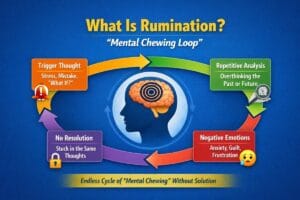
Simple shabdon me, rumination ka matlab hai “mental chewing.” Jaise koi gai khana baar-baar chabati hai, waise hi mind ek hi thought ko repeatedly process karta rehta hai. Difference ye hai ki is mental chewing se clarity nahi milti — sirf stress aur emotional heaviness badhti hai.
Ek hi thought ya problem ko baar-baar mentally chew karna without reaching solution.
Example:
“Mujhse galti ho gayi… mujhe aisa nahi karna chahiye tha…”
“Agar future me ye ho gaya to?”
“Log mere baare me kya soch rahe honge?”
Rumination vs Healthy Reflection
| Healthy Reflection | Rumination |
|---|---|
| Solution-focused | Problem-focused |
| Time-bound | Endless loop |
| Calm state | Stress state |
| Action-oriented | Paralysis |
Rumination me brain default mode network (DMN) overactive ho jata hai. Ye wahi network hai jo mind-wandering aur self-referential thinking me active hota hai.
Excess rumination linked hai:
Anxiety
Depression
Sleep disturbance
Low self-esteem
Chronic stress
Ye sirf psychological issue nahi — ye nervous system regulation issue bhi hai.
Why Rumination Feels Productive But Isn’t
Rumination dikhne me lagta hai jaise:
“Main problem solve kar raha hoon.”
Reality me kya hota hai?
1 Brain Control Illusion Create Karta Hai
Mind ko lagta hai agar main iss situation ko analyze karta rahunga to control mil jayega. Par analysis without action = mental treadmill.
2 Emotional Avoidance Pattern
Kabhi-kabhi rumination real feeling ko avoid karne ka tarika hota hai.
Example: guilt ko feel karne ke bajaye mind analysis mode me chala jata hai.
3 Cortisol & Stress Feedback Loop
Repeated negative thinking → stress hormone release → body alert mode → aur negative thoughts.
Ye ek biological feedback loop hai.
Isliye rumination ko sirf “positive socho” se solve nahi kiya ja sakta.
Humein system-level approach chahiye.
4 Why “Positive Thinking” Alone Doesn’t Work
7 Science-Backed Techniques to Stop Rumination
Ab aate hain practical solution par.
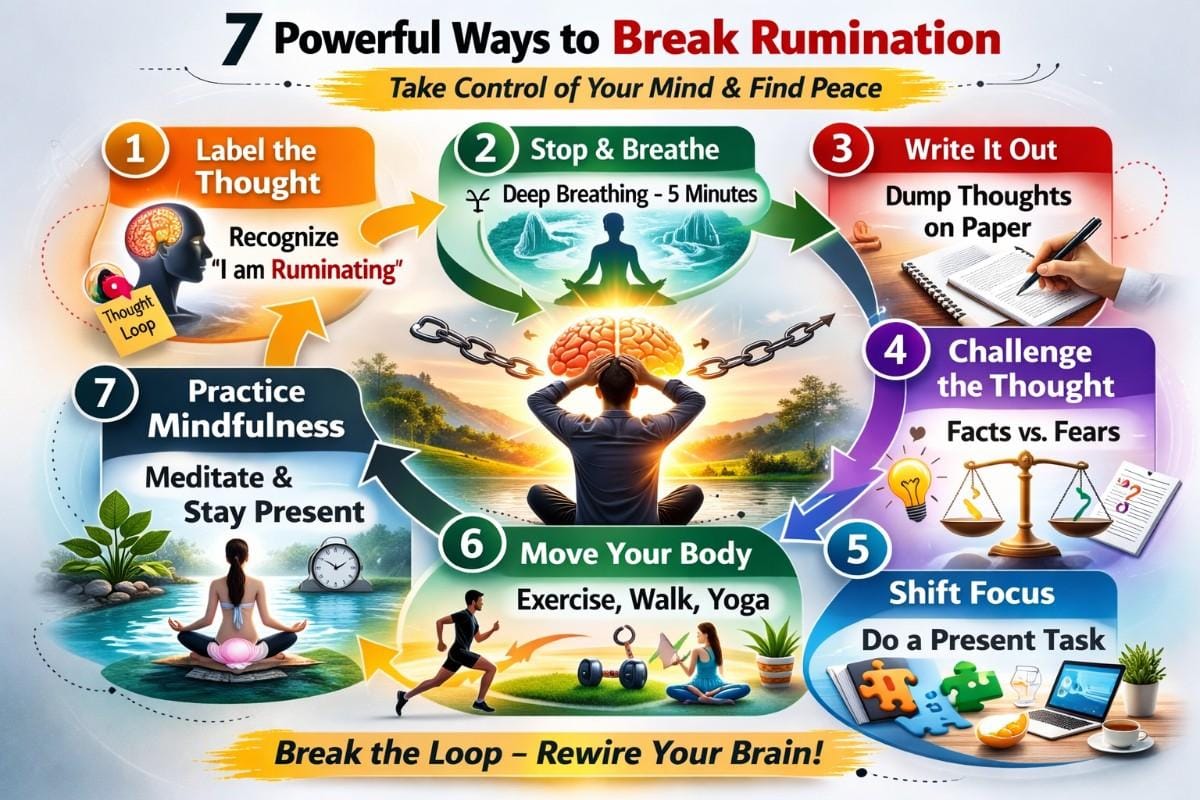
1️⃣ Thought Labeling Technique
Jab thought aaye:
Instead of:
“Ye sach hai.”
Say:
“Ye rumination thought hai.”
Isko kehte hain cognitive defusion (Acceptance & Commitment Therapy se inspired).
Brain ko identity se distance milta hai.
Practice:
10 din tak jab bhi repetitive thought aaye, bolo:
“Noticing rumination.”
“Planning mind active.”
“Past replay running.”
Ye simple labeling neural grip ko weak karta hai.
2️⃣ 5-Minute Rule (Time-Boxing)
Rumination ko suppress mat karo.
Usko container do.
Step:
5 minute timer lagao.
Sirf us problem par socho.
Timer khatam → write one action step.
Agar action nahi milta → consciously bolo:
“Ispe kal sochenge.”
Is technique se brain ko signal milta hai:
Thinking = limited + structured.
3️⃣ Move the Body (Nervous System Reset)
Rumination sitting position me zyada hota hai.
Movement breaks mental loops.
Best options:
20 push-ups
Fast walk 10 minute
Cold water face splash
Deep belly breathing 4-6 pattern
Movement se:
Stress hormone reduce
Prefrontal cortex activate
Emotional intensity drop
Mind ko shift karne ka fastest tarika = body shift.
4️⃣ Problem vs Thought Separation Sheet
Ek page ko do column me divide karo:
Left: Problem
Right: Story
Example:
Problem:
Client ne payment delay ki
Story:
Shayad wo mujhe serious nahi leta
Main capable nahi hoon
90% rumination story hota hai, real problem nahi.
Is exercise se clarity aati hai.
5️⃣ Cognitive Reframe (But Smart Way)
Galat approach:
“Sab thik hai.”
Correct approach:
“Is situation se main kya learn kar sakta hoon?”
“Worst case realistic kya hai?”
“Iska 6 month baad kya importance hoga?”
Reframe ka matlab denial nahi — perspective shift.
6️⃣ Scheduled Worry Window
Har din ek fixed time decide karo:
6:30 PM – 6:45 PM = Worry Time
Din bhar agar thought aaye:
“Isko worry window me handle karenge.”
Research show karta hai structured worry anxiety ko reduce karta hai.
Brain ko predictability pasand hai.
7️⃣ Attention Training (Focus Muscle Build Karo)
Rumination ek attention hijack hai.
Daily 10 min focus training:
Breath count 1 to 10
Agar mind bhatke → gently return
Ye brain ko train karta hai:
“Main decide karunga attention kahan jayega.”
Ye long-term most powerful solution hai.
Common Mistakes
❌ 1. Thought Ko Forcefully Stop Karna
Jitna suppress karoge, utna rebound effect.
❌ 2. Over-Analysis of Emotions
“Main aisa kyun feel kar raha hoon?” – 50 baar puchna = rumination.
❌ 3. Self-Blame
Rumination ko weakness samajhna galti hai.
Ye nervous system dysregulation ka symptom bhi ho sakta hai.
❌ 4. Digital Distraction as Escape
Scrolling temporarily distract karta hai, solve nahi karta.
When to Seek proessional Help
Agar:
Rumination daily 2+ hours chal raha hai
Sleep disturb ho rahi hai
Appetite change
Hopelessness feel ho
Panic symptoms ho
To mental health professional se consult karein.
Rumination depression aur anxiety disorder ka part bhi ho sakta hai.
Professional therapies helpful:
CBT
ACT
Mindfulness-based therapy
Help lena weakness nahi, optimization step hai.
FAQs
Q1: Rumination aur overthinking me difference?
Overthinking general ho sakta hai. Rumination mostly negative past-focused loop hota hai.
Q2: Kya meditation se rumination khatam ho jata hai?
Meditation awareness build karta hai, par alone sufficient nahi. Structured techniques zaruri hain.
Q3: Kitne din me result milega?
Consistent practice 2–4 weeks me noticeable change.
Q4: Kya rumination completely stop ho sakta hai?
Goal zero thoughts nahi — goal control + reduced intensity.
Q5: Kya positive affirmations help karti hain?
Agar nervous system calm ho to help karti hain. Warna surface level rehti hain.
Conclusion
Rumination ek mental weakness nahi — ek trained pattern hai.
Aur jo pattern train hua hai, wo retrain bhi ho sakta hai.
Agar aap genuinely stop rumination karna chahte hain, to yaad rakhein:
Awareness pehle
Structure second
Nervous system regulation third
Consistency last
Aapka mind aapka enemy nahi hai.
Wo sirf safety ensure karne ki koshish kar raha hai.
Lekin growth ke next level par jaane ke liye,
aapko repetitive thinking se break karna hi hoga.
Small daily practice → long-term mental freedom.