
Table of Contents
ToggleCognitive Distortions Explained: 10 Thinking Errors That Increase Anxiety
Introduction
Kya aap kabhi notice karte hain ki problem chhoti hoti hai, lekin mind usko 10x bada bana deta hai? Ek chhota sa message reply late ho gaya — aur dimaag turant bolta hai: “Shayad maine kuch galat bol diya… woh naraz hai… relationship khatam ho jayega.”
Yahi pattern cognitive distortions ka hota hai.
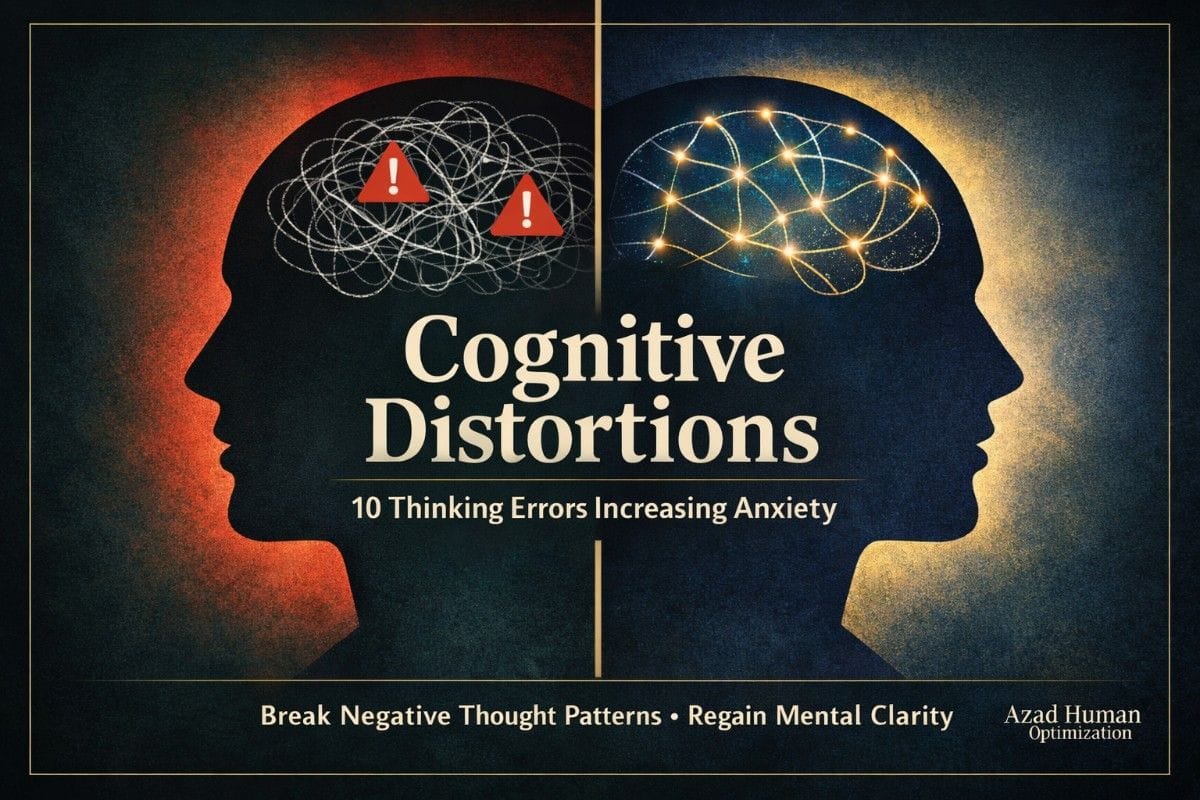
Cognitive distortions wo mental thinking errors hain jo reality ko distort (tod-madod) kar dete hain. Ye patterns subconscious level par operate karte hain aur anxiety, stress, overthinking aur self-doubt ko fuel karte hain.
Agar aap holistic healing, nervous system reset, ya mindset optimization par kaam kar rahe hain — jaise ki hum AHO framework me sikhate hain — to cognitive distortions ko samajhna fundamental step hai.
Is blog me hum in distortions ko deep, structured aur practical tareeke se samjhenge — saath hi CBT (Cognitive Behavioral Therapy) ke techniques bhi seekhenge jisse aap inhe correct kar sakte hain.
Table of Contents
What Are Cognitive Distortions?
Why They Fuel Overthinking
10 Common Thinking Errors
CBT Techniques to Correct Them
Real-Life Examples
FAQs
Conclusion
What Are Cognitive Distortions?
Cognitive distortions systematic thinking errors hote hain jo reality ko distort kar dete hain aur influence karte hain ki hum situations, logon aur khud ko kaise interpret karte hain. Ye automatic aur subconscious level par operate karte hain, aur zyadatar negative direction me hote hain.
Ye facts par based nahi hote, balki biased mental filters par based hote hain jo past experiences, conditioning, fear, trauma ya learned beliefs se develop hote hain.
Simple formula samajhiye:
Event → Distorted Interpretation → Emotional Reaction → Behavioral Response
Jab interpretation inaccurate ho jata hai, to anxiety, stress, guilt aur self-doubt jaise emotions intense ho jate hain.
2️⃣ Psychological Foundation
Cognitive distortions ka concept Cognitive Behavioral Therapy (CBT) se aata hai, jise psychiatrist Aaron T. Beck ne develop kiya tha. CBT ke according, hamare thoughts directly hamare emotions aur behavior ko influence karte hain.
Jab thinking pattern irrational ya exaggerated ho jata hai, to emotional disturbance naturally follow karta hai.
Brain naturally shortcuts use karta hai (cognitive biases) fast decision lene ke liye. Ye helpful bhi hai, lekin stress ke time par ye distorted thinking ka risk badha deta hai. Repeated distortions habitual mental loops bana dete hain jo anxiety aur overthinking ko maintain karte hain.
3️⃣ Cognitive Distortions Kaise Develop Hote Hain
Cognitive distortions usually develop hote hain:
Childhood conditioning se
Negative past experiences se
Trauma ya rejection se
Perfectionism ya high expectations se
Chronic stress exposure se
Example: Agar kisi bachche ko baar-baar criticize kiya jaye, to wo “labeling” distortion develop kar sakta hai — jaise “Main enough nahi hoon.”
Adult life me chhoti si mistake bhi intense anxiety trigger karegi kyunki distortion ek negative core belief ko reinforce karta hai.
4️⃣ Core Characteristics
Cognitive distortions ki kuch common features hote hain:
Automatic aur fast
Emotionally intense
Evidence ignore karte hain
Extreme ya exaggerated hote hain
Self-reinforcing pattern create karte hain
Sabse dangerous baat ye hai ki ye sach jaisa feel hote hain, chahe logically galat ho.
5️⃣ Anxiety Aur Overthinking Par Impact
Distorted thoughts brain ke threat system ko activate kar dete hain. Nervous system fight-or-flight mode me chala jata hai — heart rate badhta hai, muscles tense ho jate hain, stress hormones release hote hain.
Isse ek feedback loop create hota hai:
Distorted Thought → Anxiety → Threat par hyperfocus → Aur Distorted Thinking
Ye cycle chronic anxiety aur repetitive overthinking ko fuel karta hai.
6️⃣ Professional Insight
Cognitive distortions weakness nahi hain — ye common human mental habits hain. Lekin agar unchecked rahe to emotional regulation, decision-making aur self-confidence par strong negative impact dal sakte hain.
Transformation ka first step awareness hai. Jab distorted thoughts identify ho jate hain, tab unhe examine, challenge aur reframe kiya ja sakta hai.
Structured cognitive restructuring techniques ke through irrational patterns ko balanced, evidence-based thinking se replace kiya ja sakta hai.
Cognitive distortions ko samajhna matlab apne thoughts par control lena — instead of thoughts controlling yo
Reality ek hi hoti hai, lekin humara brain uski interpretation alag-alag bana leta hai.
Example:
Fact: Boss ne meeting me aapko question kiya.
Distorted Thought: “Mujhe target kiya ja raha hai. Shayad meri job risk me hai.”
Yahan fact aur interpretation alag hain — lekin anxiety interpretation se aati hai, fact se nahi.
Brain Mechanism
Amygdala threat detect karta hai
Prefrontal cortex rationalize karta hai
Agar stress high ho, to amygdala overactive ho jata hai
Result: Logical thinking kam, emotional thinking zyada
Isliye cognitive distortions sirf mental habit nahi — nervous system state se bhi connected hote hain.
Why They Fuel Overthinking
Cognitive distortions directly overthinking ko activate karte hain. Jab mind distorted thought generate karta hai, to woh usko prove karne ke liye aur thoughts banata hai.
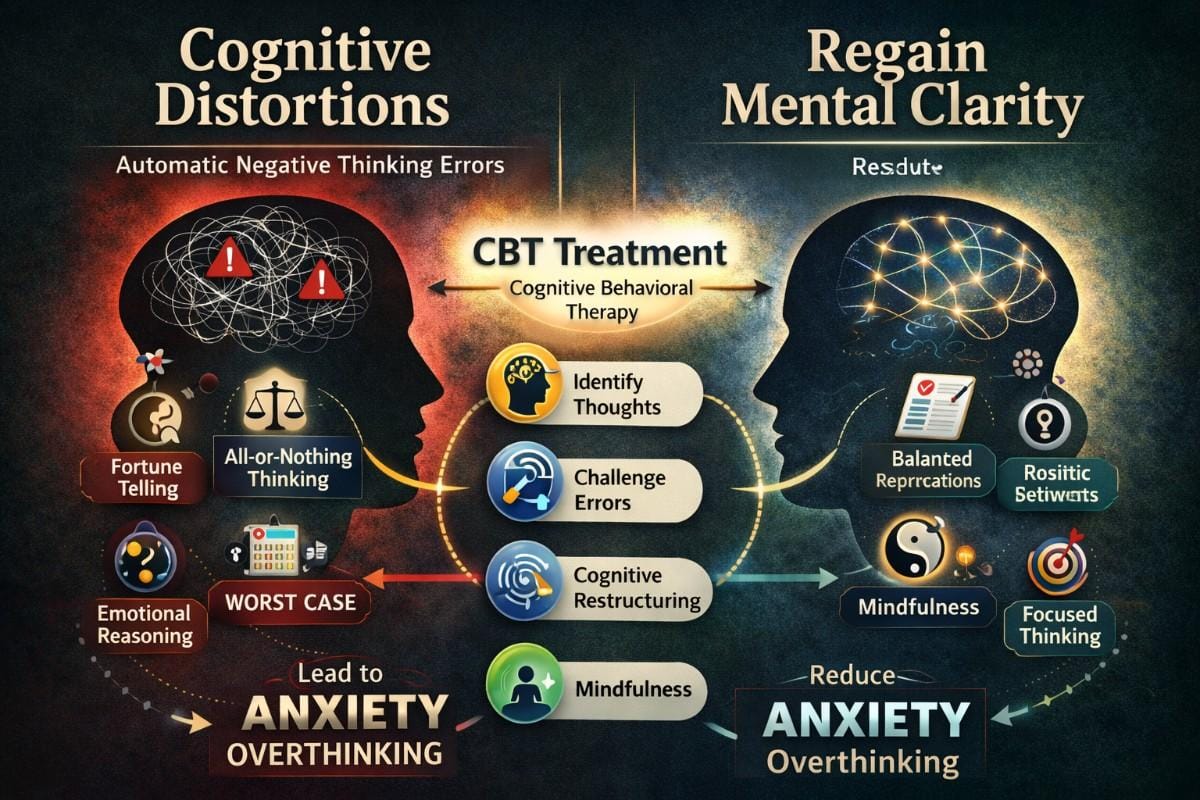
Example:
“Woh reply nahi kar raha.”
→ “Shayad ignore kar raha hai.”
→ “Mujhse bore ho gaya.”
→ “Main interesting nahi hoon.”
Ye ek thought loop create karta hai.
Many cognitive distortions turn into rumination loops that replay the same negative thoughts repeatedly.
Agar aap overthinking ka deep scientific breakdown samajhna chahte hain, to hamara pillar guide zarur padhein:
Cognitive distortions directly fuel repetitive negative thinking loops. If you want a deep psychological breakdown of how overthinking works and how to stop it, read our complete guide here.
Distortions + Nervous System
Distorted thoughts → Emotional trigger
Emotional trigger → Cortisol release
Cortisol → Hyper-alert state
Hyper-alert state → More negative thinking
Ye vicious cycle anxiety ko maintain karta hai.
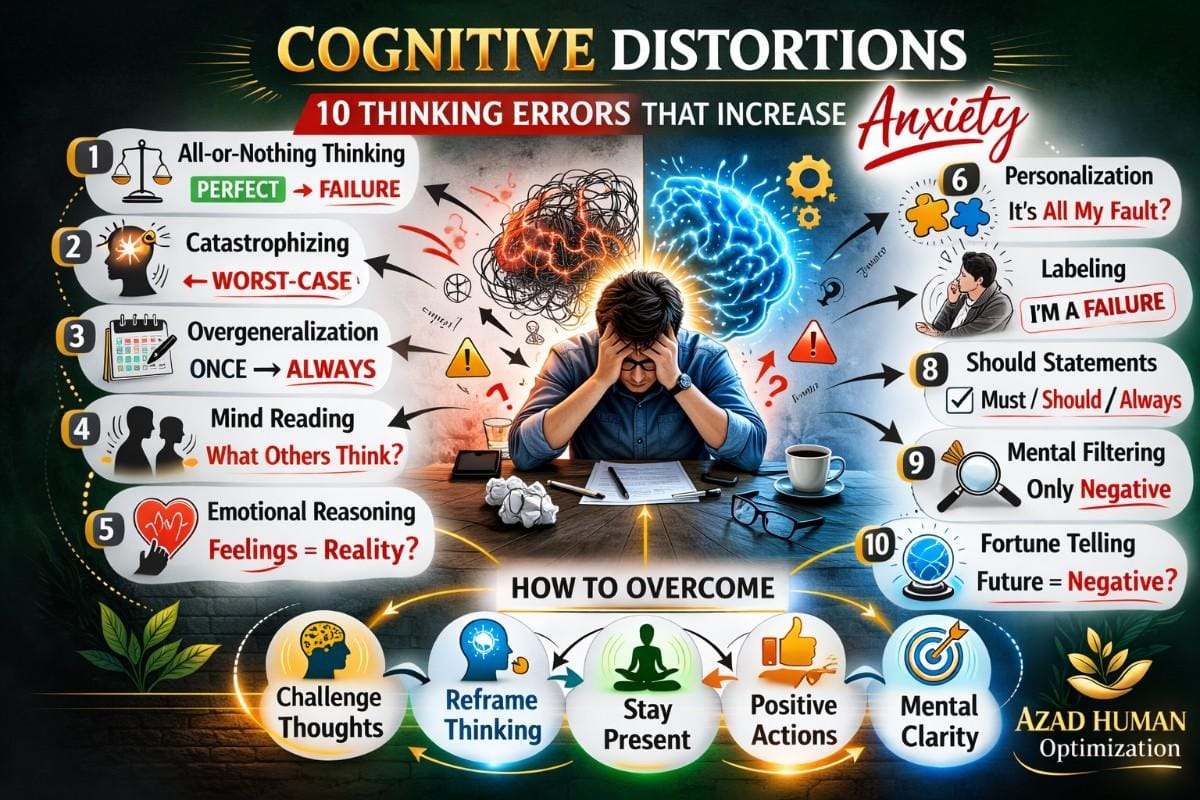
10 Common Thinking Errors
Ab hum 10 most common cognitive distortions ko detail me samjhenge.
1. All-or-Nothing Thinking
Ya to perfect, ya total failure.
Example:
“Agar main 100% disciplined nahi hoon, to main loser hoon.”
Reality: Growth gradual hoti hai.
2. Overgeneralization
Ek negative event ko universal rule bana dena.
Example:
“Ek baar fail hua. Main life me kabhi successful nahi ho sakta.”
3. Mental Filter
Positive ignore karke sirf negative pe focus karna.
Example:
10 logon ne praise kiya, 1 ne criticize kiya — aur aap sirf criticism yaad rakhte hain.
4. Mind Reading
Proof ke bina assume karna ki dusre kya soch rahe hain.
Example:
“Woh mujhe judge kar raha hai.”
5. Catastrophizing
Worst-case scenario imagine karna.
Example:
“Presentation kharab hui to career khatam.”
6. Emotional Reasoning
“Main feel kar raha hoon, to ye sach hoga.”
Example:
“Mujhe lagta hai main capable nahi hoon, isliye main capable nahi hoon.”
7. Should Statements
Rigid rules banana.
“Mujhe hamesha strong rehna chahiye.”
“Mujhe kabhi mistake nahi karni chahiye.”
8. Labeling
Ek mistake ko identity bana dena.
“Main stupid hoon.”
Instead of: “Maine stupid mistake ki.”
9. Personalization
Har cheez ko apne saath link kar lena.
“Team ka mood off hai — shayad meri wajah se.”
10. Magnification & Minimization
Problems ko bada karna, achievements ko chhota karna.
“Ye to bas luck tha.”
CBT Techniques to Correct Them
Cognitive distortions ko correct karne ke liye CBT (Cognitive Behavioral Therapy) highly effective hai.
Yahan 5 practical tools:
1. Thought Record Method
Step 1: Situation likho
Step 2: Automatic thought likho
Step 3: Emotion rate karo (0–100%)
Step 4: Evidence for & against likho
Step 5: Balanced thought create karo
Ye method brain ko retrain karta hai.
2. Cognitive Reframing
Distorted thought ko alternative interpretation do.
Instead of: “Woh mujhe ignore kar raha hai.”
Try: “Shayad busy hoga.”
3. Reality Testing
Apne aap se pucho:
Kya ye fact hai ya assumption?
Agar friend hota to main kya advice deta?
4. Behavioral Experiment
Apne fear ko test karo.
Agar aapko lagta hai log aapko judge karenge, to intentionally small action lo — observe result.
5. Nervous System Regulation
Breathing, grounding, body awareness.
Calm body → Clear thinking.
Mind ko change karne ke liye body ko regulate karna zaroori hai.
Distorted thinking intensifies when your nervous system is dysregulated. Learn how to reset it using this science-based guide.
Real-Life Examples
Case 1: Relationship Anxiety
Situation: Partner reply late karta hai.
Distortion: Mind reading + catastrophizing.
Correction: Reality testing + reframing.
Result: Anxiety level 80% se 30% par aa gaya.
Case 2: Career Self-Doubt
Situation: Boss ne feedback diya.
Distortion: Labeling (“Main incompetent hoon.”)
Correction: Evidence check + growth mindset.
Result: Confidence stable.
Case 3: Social Anxiety
Situation: Public speaking.
Distortion: All-or-nothing thinking.
Correction: Balanced thinking (“Even if I make mistakes, it’s okay.”)
FAQs
1. Kya cognitive distortions normal hain?
Haan. Har insaan ke mind me hote hain. Problem tab hoti hai jab ye habitual ban jate hain.
2. Kya inhe permanently remove kiya ja sakta hai?
Completely eliminate nahi, lekin awareness aur practice se intensity drastically reduce hoti hai.
3. Kitne time me improvement hota hai?
Regular CBT practice se 3–6 weeks me noticeable shift.
4. Kya meditation helpful hai?
Haan. Meditation awareness increase karta hai, jo distortion detect karne me help karta hai.
5. Kya ye anxiety disorder ka part hote hain?
Often yes. Generalized Anxiety Disorder, Depression, aur Social Anxiety me common hote hain.
Conclusion
Cognitive distortions silent saboteurs hain. Ye aapke thoughts ko hijack karte hain, anxiety ko amplify karte hain, aur overthinking ko endless loop me daal dete hain.
Lekin good news ye hai:
Ye permanent personality flaw nahi
Ye brain habit hai
Aur habits retrain ho sakti hain
Jab aap distortions ko identify karna seekh lete hain, to aap emotional freedom ki taraf pehla step le chuke hote hain.
Awareness → Regulation → Reframing → Rewiring
Yahi transformation ka path hai.
Agar aap apne mind, body aur nervous system ko deeply reset karna chahte hain, to structured healing framework follow karna zaroori hai.
Clarity tab aati hai jab thinking clear hoti hai.
Aur thinking clear tab hoti hai jab distortions break hote hain.
Start observing your thoughts today — because healing begins with awareness.
This guide is part of the structured mental optimization framework developed by Azad Human Optimization.