
Table of Contents
ToggleNervous System Dysregulation: 10 Signs Your Nervous System Is Out of Balance
Introduction:
Modern life mein stress, information overload, aur fast lifestyle ki wajah se nervous system dysregulation ek common problem ban chuki hai. Jab body ka nervous system balance mein hota hai, tab hum calm feel karte hain, focus better hota hai aur emotions stable rehte hain. Lekin jab nervous system dysregulation hota hai, body constant stress response mein reh sakti hai, jisse anxiety, fatigue aur poor sleep jaise symptoms dikhne lagte hain. Isi liye nervous system ko regulate karna mental aur physical health dono ke liye important hai.
Nervous System Regulation Kya Hota Hai
Nervous system regulation ka matlab hai body ka stress aur relaxation states ke beech healthy balance maintain karna. Jab system regulated hota hai, body easily calm state mein aa sakti hai.
Modern Lifestyle Ka Impact
Modern habits nervous system ko disturb kar sakti hain:
Excess screen time
Chronic stress
Poor sleep patterns
Lack of physical movement
Dysregulated Nervous System Ka Meaning
Body constantly fight-or-flight mode mein rehna
Relax karne mein difficulty
Emotional aur physical imbalance feel hona
If you want to improve mental clarity, emotional balance, and overall brain performance, explore our complete guides on nervous system regulation and human optimization techniques.
Table Of Content
1. Introduction
Nervous system regulation kya hota hai
Modern lifestyle ka impact
Dysregulated nervous system ka meaning
2. What Is Nervous System Dysregulation?
1 Autonomic Nervous System Explained
Sympathetic nervous system (fight or flight)
Parasympathetic nervous system (rest and digest)
2 Stress Response and Survival Mode
Chronic stress ka effect
Body constantly alert state mein kyu rehti hai
3.10 Signs Your Nervous System Is Dysregulated
1.Constant Anxiety and Overthinking
Brain always threat search mode mein
Racing thoughts
2. Chronic Fatigue and Low Energy
Body tired but mind restless
Nervous system burnout
3. Poor Sleep or Insomnia
Difficulty falling asleep
Night time stress response
4. Digestive Problems
Gut-brain connection
Bloating, IBS, poor digestion
5. Emotional Instability
Mood swings
Irritability
6. Brain Fog and Poor Focus
Mental clarity low
Cognitive fatigue
7. Feeling Constantly on Edge
Hypervigilance
Fight-or-flight activation
8. Low Stress Tolerance
Small problems feel overwhelming
Nervous system overload
9. Social Withdrawal and Isolation
Freeze response
Avoidance behavior
10. Physical Symptoms Without Clear Cause
Headaches
Muscle tension
Rapid heartbeat
4. Why Nervous System Dysregulation Happens
1 Chronic Stress
2 Trauma and Emotional Suppression
3 Digital Overload
4 Poor Sleep Habits
5 Gut Imbalance
5. Simple Ways to Regulate Your Nervous System
1 Breathing Techniques
2 Grounding Exercises
3 Nervous System Friendly Lifestyle
4 Vagus Nerve Stimulation
6. When Your Nervous System Starts Healing
Calm mind
Better sleep
Emotional stability
Improved focus
7. Frequently Asked Questions (FAQ)
How do I know if my nervous system is dysregulated?
Can breathing exercises calm the nervous system?
How long does nervous system healing take?
8. Conclusion
Nervous system regulation ka importance
Small daily habits big change la sakte hai.
2. What Is Nervous System Dysregulation?
Nervous system dysregulation tab hota hai jab body ka stress response system balance lose kar deta hai aur nervous system normal calm state mein easily return nahi kar pata. Healthy nervous system mein body stress aur relaxation ke beech smoothly switch karti hai. Lekin jab nervous system dysregulation develop ho jata hai, body zyada time survival mode mein reh sakti hai. Iska matlab hai brain aur body constantly environment ko threat ke liye scan karte rehte hain. Yeh condition anxiety, fatigue, brain fog aur sleep problems jaise symptoms create kar sakti hai. Modern lifestyle factors jaise chronic stress, poor sleep aur digital overload bhi nervous system ke natural regulation ko disturb kar sakte hain.
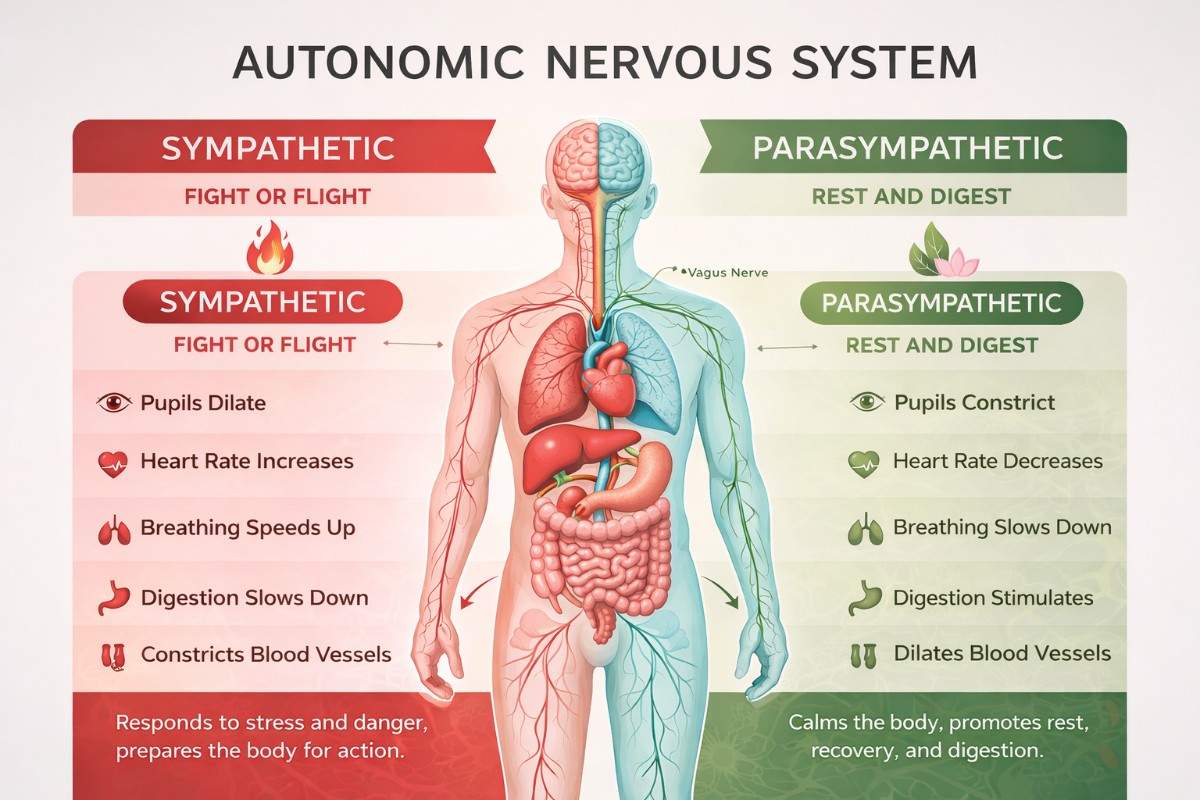
1 Autonomic Nervous System Explained
Autonomic Nervous System (ANS) body ka automatic control system hai jo heartbeat, breathing, digestion aur stress response ko regulate karta hai. Yeh system do main branches mein divide hota hai jo body ko balance mein rakhte hain.
Sympathetic Nervous System (Fight or Flight)
Sympathetic nervous system body ko stress ya danger ke time activate karta hai. Yeh system body ko quick action ke liye prepare karta hai.
Heart rate increase ho jata hai
Breathing faster ho jati hai
Muscles alert aur tense ho jate hain
Energy temporarily boost ho jati hai
Parasympathetic Nervous System (Rest and Digest)
Parasympathetic nervous system body ko calm aur recovery state mein le aata hai. Yeh system relaxation aur healing ke liye responsible hota hai.
Heart rate normal ho jata hai
Digestion improve hoti hai
Body relax feel karti hai
Repair aur recovery process activate hota hai
2 Stress Response and Survival Mode
Chronic stress nervous system ko long time tak alert state mein rakh sakta hai. Jab body repeatedly stress experience karti hai, brain survival mode ko default bana sakta hai. Isi situation ko nervous system dysregulation kaha jata hai jahan body bina real danger ke bhi hyper-alert feel karti rehti hai.
Common reasons jisse body survival mode mein atki reh sakti hai:
Continuous mental stress
Poor sleep patterns
Emotional overload
Digital and information overload
3.10 Signs Your Nervous System Is Dysregulated
Nervous system dysregulation tab hota hai jab body ka stress response system balance lose kar deta hai aur nervous system constantly alert ya overwhelmed state mein rehne lagta hai. Jab nervous system properly regulate nahi hota, to mind aur body dono par iska effect dikhne lagta hai. Anxiety, fatigue, poor sleep aur emotional instability jaise symptoms aksar nervous system dysregulation ke common signs hote hain. In signals ko samajhna important hai kyunki early awareness se nervous system ko regulate karna easier ho jata hai.
1. Constant Anxiety and Overthinking
Constant anxiety aur overthinking nervous system imbalance ka common sign hai. Jab nervous system dysregulation hota hai, brain constantly potential threats ko scan karta rehta hai. Is condition mein mind ko relax karna difficult ho jata hai aur thoughts repeatedly same worries par focus karte rehte hain.
Common signs include:
Brain hamesha threat search mode mein rehta hai
Racing thoughts control karna mushkil ho jata hai
Mind easily calm state mein nahi aata
2. Chronic Fatigue and Low Energy
Chronic fatigue bhi nervous system imbalance ka indicator ho sakta hai. Jab body long time tak stress response activate rakhti hai, to energy resources gradually drain hone lagte hain. Yeh condition nervous system dysregulation ke saath often dekhi jati hai.
Typical symptoms ho sakte hain:
Body tired feel karti hai even after rest
Mind restless ya overactive rehta hai
Long-term stress se nervous system burnout feel hota hai
3. Poor Sleep or Insomnia
Sleep problems bhi nervous system imbalance se closely connected hoti hain. Jab body calm state mein shift nahi kar pati, to sleep cycle disturb ho sakti hai. Nervous system dysregulation ke case mein mind night time mein bhi alert state mein reh sakta hai.
Common sleep related signs:
Sleep initiate karne mein difficulty
Night time stress response activate rehna
Frequently raat mein awaken hona
4. Digestive Problems
Digestive health aur nervous system ka strong connection hota hai jise gut-brain connection kaha jata hai. Jab nervous system dysregulated ho jata hai, digestion process bhi slow ya irregular ho sakti hai. Nervous system dysregulation gut functioning ko impact kar sakta hai.
Possible digestive symptoms:
Bloating ya stomach discomfort
IBS jaise symptoms
Poor digestion ya irregular appetite
5. Emotional Instability
Emotional instability bhi nervous system imbalance ka sign ho sakta hai. Jab nervous system continuously stress signals process karta hai, emotional responses zyada intense ho sakte hain.
Is situation mein:
Mood swings frequently ho sakte hain
Irritability increase ho sakti hai
Emotional reactions disproportionate feel ho sakte hain
6. Brain Fog and Poor Focus
Brain fog aur concentration problems bhi nervous system dysregulation se linked ho sakte hain. Jab brain stress mode mein rehta hai, cognitive clarity reduce ho sakti hai aur focus maintain karna difficult ho jata hai.
Common experiences:
Mental clarity low feel hona
Decision making slow ho jana
Cognitive fatigue quickly develop hona
7. Feeling Constantly on Edge
Hypervigilance ek aur important sign hai. Is condition mein body continuously alert state mein rehti hai, jaise koi danger nearby ho. Yeh nervous system dysregulation ka typical pattern hai jahan fight-or-flight response frequently activate hota hai.
Typical indicators:
Constant tension feel hona
Easily startled feel karna
Body fight-or-flight mode mein rehna
8. Low Stress Tolerance
Low stress tolerance bhi nervous system overload ka signal ho sakta hai. Jab nervous system already overstimulated hota hai, small challenges bhi overwhelming feel ho sakte hain.
Examples include:
Small problems bhi stressful lagna
Emotional overwhelm quickly hona
Nervous system overload feel karna
9. Social Withdrawal and Isolation
Kabhi-kabhi nervous system dysregulation freeze response ko trigger kar sakta hai. Is state mein body energy conserve karne ki koshish karti hai aur social interaction avoid karne lagti hai.
Possible behaviors:
Social situations se distance banana
Isolation prefer karna
Avoidance behavior develop hona
10. Physical Symptoms Without Clear Cause
Nervous system imbalance physical symptoms bhi create kar sakta hai even when medical tests normal ho. Chronic stress aur nervous system dysregulation body ke muscles aur heart response ko impact kar sakte hain.
Common physical signs:
Frequent headaches
Muscle tension
Rapid heartbeat without obvious reason
In signs ko identify karna important hai kyunki yeh signals body ke internal balance ke bare mein important information dete hain.
4. Why Nervous System Dysregulation Happens
Nervous system dysregulation aksar ek single reason se nahi hota. Yeh multiple lifestyle, emotional aur biological factors ke combination se develop hota hai. Modern life mein constant stress, information overload aur unhealthy daily habits nervous system ke natural balance ko disturb kar dete hain. Jab body baar-baar stress signals receive karti hai, nervous system gradually overactive ya exhausted ho sakta hai. Isi imbalance ko nervous system dysregulation kaha jata hai, jahan body ko calm state mein wapas aane mein difficulty hoti hai.
1 Chronic Stress
Chronic stress nervous system imbalance ka sabse common reason hai. Jab stress long time tak continue karta hai, body repeatedly fight-or-flight mode activate karti hai. Time ke saath yeh pattern nervous system dysregulation ko trigger kar sakta hai.
Common triggers:
Work pressure
Financial stress
Constant mental worry
Mindfulness and meditation are powerful tools to break the cycle of overthinking and mental rumination. You can also follow practical techniques in our guide on **how to stop overthinking naturally**.
2 Trauma and Emotional Suppression
Past trauma ya suppressed emotions bhi nervous system ko deeply impact karte hain. Jab emotions properly process nahi hote, body unhe stress signals ki tarah store kar leti hai.
Possible effects:
Emotional tension
Anxiety patterns
Long-term nervous system imbalance
3 Digital Overload
Excess screen time aur constant notifications brain ko continuously stimulate karte hain. Yeh overstimulation nervous system ko rest karne ka chance kam deta hai.
Digital overload sources:
Social media scrolling
Constant phone notifications
Late-night screen exposure
4 Poor Sleep Habits
Sleep nervous system recovery ke liye essential hai. Poor sleep patterns body ke stress regulation system ko weaken kar dete hain.
Common sleep issues:
Late sleeping habits
Interrupted sleep
Irregular sleep schedule
5 Gut Imbalance
Gut aur brain ka connection strong hota hai jise gut-brain axis kaha jata hai. Agar gut health disturb ho jaye, to stress response aur mood regulation par bhi effect padta hai.
Possible gut issues:
Poor digestion
Bloating
Nutrient imbalance
5. Simple Ways to Regulate Your Nervous System
Agar aap nervous system dysregulation experience kar rahe hain, to kuch simple daily practices nervous system ko calm aur balanced state mein laane mein help kar sakti hain. Nervous system ko regulate karna ek gradual process hai jisme body ko safety aur relaxation signals dena important hota hai. Consistent habits aur mindful practices se nervous system dysregulation ko reduce kiya ja sakta hai aur body ko naturally rest-and-recovery mode mein shift kiya ja sakta hai.
1 Breathing Techniques
Deep breathing nervous system ko calm karne ka sabse effective aur simple method hai. Slow aur controlled breathing body ko signal deti hai ki danger khatam ho gaya hai.
Helpful techniques:
Slow deep breathing
Box breathing practice
Alternate nostril breathing
2 Grounding Exercises
Grounding exercises body ko present moment mein laati hain aur stress response ko reduce karti hain.
Examples include:
Barefoot walking on grass
Mindful body awareness
Slow stretching or gentle movement
3 Nervous System Friendly Lifestyle
Healthy daily habits nervous system balance ko support karte hain aur nervous system dysregulation ko gradually improve kar sakte hain.
Important habits:
Consistent sleep schedule
Regular physical movement
Balanced nutrition
4 Vagus Nerve Stimulation
Vagus nerve parasympathetic system ko activate karta hai jo body ko calm state mein laata hai.
Simple practices:
Humming or chanting
Cold water face splash
Slow deep breathing exercises
6. When Your Nervous System Starts Healing
Jab body gradually nervous system dysregulation se recover karna start karti hai, to mind aur body dono mein positive changes dikhne lagte hain. Nervous system healing ek gradual process hai jisme body stress response se bahar aakar balanced state mein return karti hai.
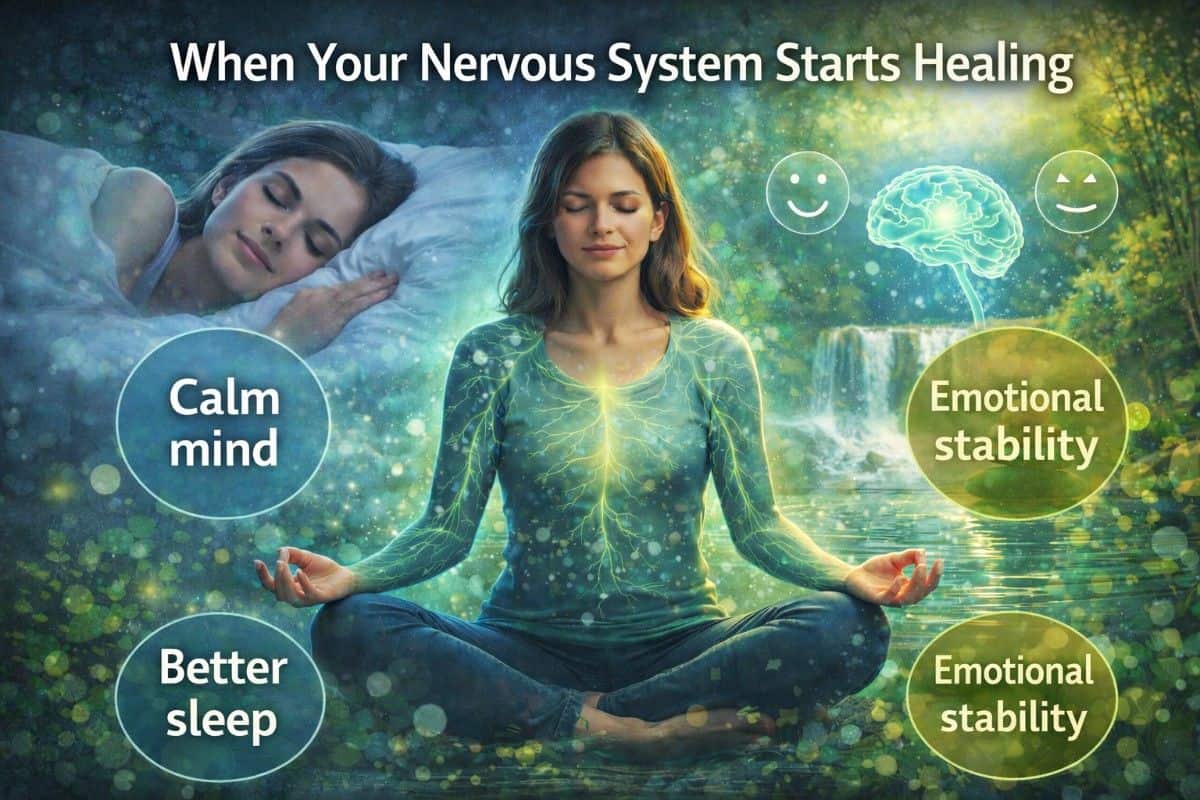
Jab nervous system dysregulation reduce hota hai, to emotional stability, better sleep aur mental clarity naturally improve hone lagte hain. Yeh signals indicate karte hain ki nervous system slowly regulate ho raha hai.
Calm Mind
Jab nervous system heal hone lagta hai, mind zyada calm aur stable feel karta hai. Brain constantly threat search mode mein nahi rehta.
Common signs:
Thoughts slow aur clear hone lagte hain
Overthinking gradually reduce hoti hai
Inner calmness feel hone lagti hai
Better Sleep
Sleep improvement nervous system healing ka important indicator hota hai. Jab nervous system dysregulation decrease hota hai, body night time mein easily relax ho pati hai.
Possible improvements:
Jaldi sleep aana
Deep aur restorative sleep
Night time stress kam hona
Emotional Stability
Nervous system regulate hone par emotions bhi balanced ho jate hain.
Signs include:
Mood swings kam hona
Irritability reduce hona
Emotional responses stable hona
Long-term stress and elevated cortisol levels also accelerate aging and damage cellular health. That’s why lifestyle and longevity practices are important for long-term nervous system resilience.
Improved Focus
Healthy nervous system brain function ko support karta hai. Jab stress response calm hota hai, mental clarity improve ho jati hai.
Common benefits:
Better concentration
Clear thinking
Cognitive fatigue kam hona
7. Frequently Asked Questions (FAQ)
How do I know if my nervous system is dysregulated?
Agar aap frequently anxiety, fatigue, poor sleep, brain fog ya constant stress experience karte hain, to yeh nervous system dysregulation ke common signs ho sakte hain. Jab nervous system imbalance hota hai, body aksar fight-or-flight ya survival mode mein reh sakti hai.
Can breathing exercises calm the nervous system?
Haan, slow aur deep breathing techniques nervous system ko calm karne mein help karti hain. Regular breathing practices body ko relaxation signals bhejti hain aur nervous system dysregulation ko gradually reduce kar sakti hain.
How long does nervous system healing take?
Nervous system healing ek gradual process hai. Consistent lifestyle habits, stress management aur relaxation techniques se nervous system dysregulation weeks ya months mein improve ho sakta hai.
8. Conclusion
Nervous system ka balance maintain karna mental clarity, emotional stability aur overall well-being ke liye bahut important hai. Jab nervous system dysregulation develop ho jata hai, to body aur mind dono constant stress state mein reh sakte hain. Lekin right knowledge aur daily habits se nervous system ko gradually regulate kiya ja sakta hai. Your brand ka mission bhi isi awareness ko spread karna hai taki log apni nervous system health ko samajh kar better lifestyle adopt kar sakein.
Why Nervous System Regulation Matters
Healthy nervous system body ko calm, focused aur emotionally balanced banata hai.
Key benefits:
Stress response control mein aata hai
Emotional balance improve hota hai
Mind aur body relaxed feel karte hain
Small Daily Habits Create Big Change
Consistent small habits long-term nervous system healing mein powerful role play karti hain.
Helpful daily practices:
Deep breathing exercises
Consistent sleep routine
Mindful movement and relaxation
Agar aap regular healthy habits follow karte hain, to gradually nervous system dysregulation reduce ho sakta hai aur mind-body balance improve ho sakta hai.
For more science-based guides on mental optimization, longevity, and nervous system healing, visit our Azad Human Optimization hub for peak performance and emotional balance.