Agar aap in experiences se relate kar pa rahe hain, to ek important baat samajhiye — problem sirf mindset ya willpower ki nahi hoti.
Modern neuroscience ke hisaab se aksar real problem hoti hai:
👉 Nervous System Dysregulation
Jab body ka internal alarm system constantly “ON” mode me rehta hai, to brain normal situations ko bhi threat samajhne lagta hai. Isliye:
• Normal situations bhi dangerous lag sakti hain • Logical thinking slow ho jati hai • Body relax nahi kar pati • Overthinking automatic ho jata hai
Lekin yahan ek important good news bhi hai.
Human nervous system permanently damage nahi hota. Brain highly adaptable hota hai, jise neuroscience me neuroplasticity kaha jata hai. Iska matlab hai ki sahi practices ke through nervous system ko gradually reset aur regulate kiya ja sakta hai.
Yeh guide ek science-based Nervous System Reset framework explain karti hai jo body ko chronic stress se bahar nikalne me help karta hai.
Is complete guide me aap seekhenge:
• Nervous system actually stress ko kaise process karta hai • Overthinking aur anxiety ka biological reason kya hota hai • Fight-Flight-Freeze-Fawn responses kaise kaam karte hain • Practical 21-Day Nervous System Reset plan • Daily habits jo nervous system ko calm aur regulate karti hain
Yeh sirf theory nahi hai — yeh ek body-based recovery blueprint hai jo neuroscience research aur practical regulation techniques par based hai.
Agar aap samajhna chahte hain ki stress aur anxiety ke peeche real biological mechanism kya hai, to chaliye step-by-step nervous system regulation ko deeply explore karte hain.
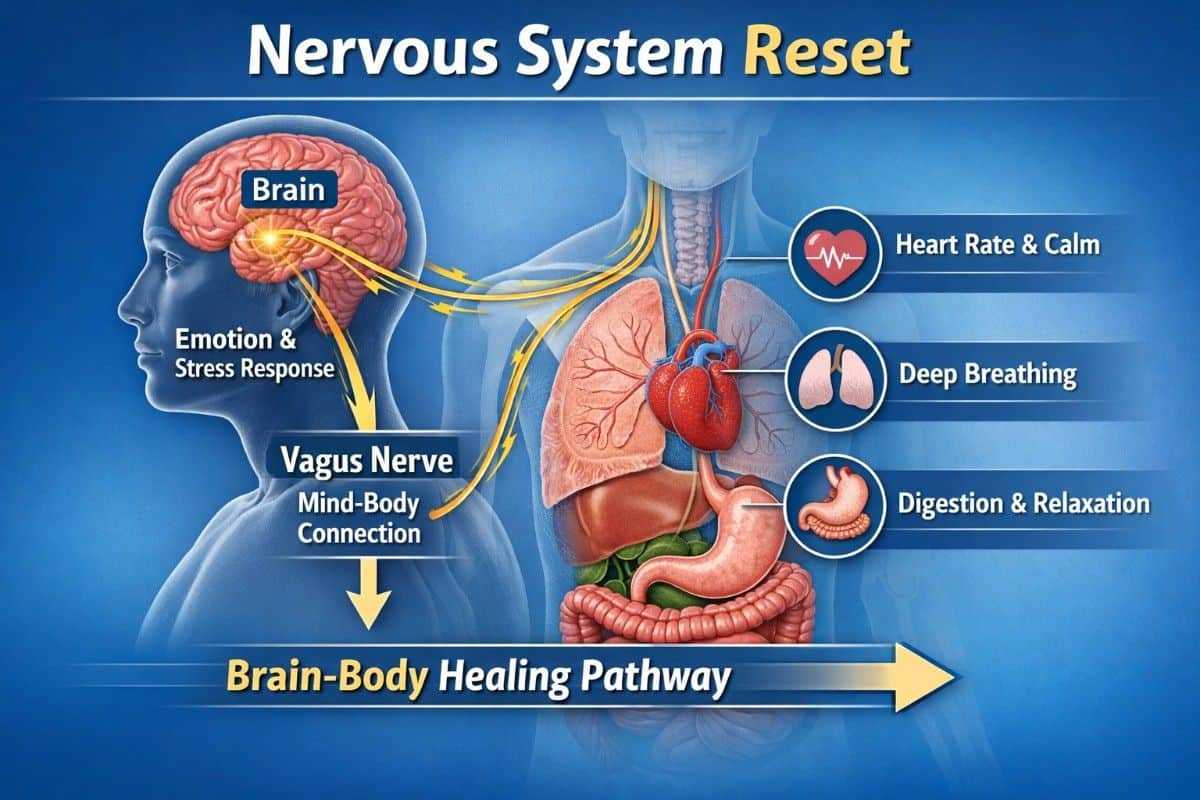
The vagus nerve acts as a communication highway between the brain and body, helping regulate stress, breathing, heart rate, and digestion.
Table of Contents
1. Introduction: Why Nervous System Health Matters
2. Nervous System Kya Hai?
Central Nervous System vs Autonomic Nervous System
Nervous System Ka Main Role Body Me
3. Autonomic Nervous System Breakdown
Sympathetic Nervous System (Fight or Flight)
Parasympathetic Nervous System (Rest and Repair)
4. The Neuroscience of Stress
Amygdala – Brain Ka Alarm System
HPA Axis and Cortisol Stress Loop
Vagus Nerve and Parasympathetic Activation
5. Modern Lifestyle and Nervous System Dysregulation
8. 7 Hidden Signs Your Nervous System Needs a Reset
Overthinking
Chronic Fatigue
Brain Fog
Sleep Issues
Digestive Problems
Emotional Reactivity
Feeling Constantly On Edge
9. Polyvagal Theory Explained
Ventral Vagal State
Sympathetic State
Dorsal Vagal State
10. 7 Daily Habits That Heal Your Nervous System
Morning Sunlight
Gentle Movement
Digital Detox
Body Relaxation
Consistent Sleep
Mindful Breathing
Time in Nature
11. 5 Powerful Breathing Techniques to Reset the Nervous System
Box Breathing
Physiological Sigh
Diaphragmatic Breathing
4-7-8 Breathing
Alternate Nostril Breathing
12. 10 Foods That Calm and Regulate the Nervous System
Magnesium Rich Foods
Omega-3 Foods
Adaptogenic Herbs
Fermented Foods
Complex Carbohydrates
13. AHO Nervous System Reset Framework
Awareness
Healing Practices
Optimization
14. 21-Day Nervous System Reset Plan
Week 1 – Calm the Stress Response
Week 2 – Rebuild Safety Signals
Week 3 – Build Emotional Resilience
15. Common Mistakes That Keep Your Nervous System Stuck
Overstimulation
Sleep Neglect
Chronic Stress Habits
16. Frequently Asked Questions
How long does it take to reset the nervous system?
What is the fastest way to calm the nervous system?
Can breathing exercises reset the nervous system?
Final Thoughts: Your Nervous System Can Heal
17. Conclusion
18. CTA
Nervous System Kya Hai?
Nervous system human body ka sabse powerful communication network hai. Yeh ek complex electrical aur chemical signaling system hai jo brain, spinal cord aur body ke har organ ko connect karta hai.
Simple words me, nervous system hi decide karta hai ki aap:
calm feel karenge ya anxious
focused rahenge ya distracted
energetic rahenge ya exhausted
Aapka mood, stress response, focus aur body ki internal functioning — sab kuch nervous system regulate karta hai.
Neuroscience ke hisaab se nervous system do major parts me divide hota hai:
Central Nervous System (CNS)
Autonomic Nervous System (ANS)
In dono systems ka coordination hi body ko healthy aur balanced rakhta hai.
Central Nervous System (CNS)
Central Nervous System ko body ka command center bhi kaha jata hai. Is system me do main components hote hain:
Brain
Spinal Cord
Brain thoughts, emotions, memory aur decision making control karta hai. Yeh body ke saare signals ko process karta hai aur decide karta hai ki body ka next action kya hoga.
Spinal cord brain aur body ke beech information highway ki tarah kaam karta hai. Yeh signals ko body se brain tak aur brain se body tak transmit karta hai.
Example ke liye:
Agar aap garam cheez touch karte hain
spinal cord instantly brain ko signal bhejta hai
aur body turant reaction deti hai
Yeh sab CNS ka kaam hai.
Autonomic Nervous System (ANS)
Autonomic Nervous System body ke automatic functions ko regulate karta hai. Yeh system bina conscious effort ke kaam karta hai.
ANS control karta hai:
Heartbeat
Breathing pattern
Digestion
Blood pressure
Hormone release
Matlab aapko consciously sochne ki zarurat nahi hoti ki heart beat kare ya lungs breathe karein — yeh sab automatically ANS manage karta hai.
Autonomic nervous system ke do major branches hote hain.
Sympathetic Nervous System (Fight or Flight Mode)
Sympathetic system ko body ka “gas pedal” bhi kaha jata hai. Jab brain kisi threat ya stress ko detect karta hai, to yeh system activate ho jata hai.
Is state me body survival ke liye prepare hoti hai.
Iske effects:
Heart rate increase ho jata hai
Breathing fast ho jati hai
Muscles tight ho jate hain
Cortisol aur adrenaline release hota hai
Yeh response emergency situations me helpful hota hai, lekin agar yeh system constantly active rahe to stress aur anxiety develop ho sakti hai.
Parasympathetic Nervous System (Rest and Digest Mode)
Parasympathetic system ko body ka “brake pedal” kaha jata hai.
Jab brain safety feel karta hai, to yeh system activate ho jata hai aur body ko relax mode me le aata hai.
Is state me:
Heart rate slow ho jata hai
Digestion improve hota hai
Muscles relax ho jate hain
Body repair aur recovery mode me chali jati hai
Yeh system nervous system regulation aur healing ke liye bahut important hai.
Balance Concept – Real Health Yahi Hai
Healthy nervous system ka matlab hai gas pedal aur brake pedal ka balance.
Matlab:
Sympathetic system zarurat par activate ho
Parasympathetic system body ko wapas calm state me le aaye
Problem tab hoti hai jab sympathetic system constantly ON mode me rehta hai aur body ko relax hone ka mauka nahi milta.
Is condition ko neuroscience me nervous system dysregulation kaha jata hai.
Recovery ka main goal simple hai:
👉 Body ko wapas safety mode me lana aur nervous system ka natural balance restore karna.
Isi process ko hum nervous system reset bhi kehte hain.
Autonomic Nervous System Breakdown
Autonomic Nervous System (ANS) nervous system ka wo part hai jo body ke automatic functions ko control karta hai. Iska matlab hai ki body ke kai important processes bina aapke conscious effort ke chal rahe hote hain — jaise heartbeat, breathing, digestion aur hormone release.
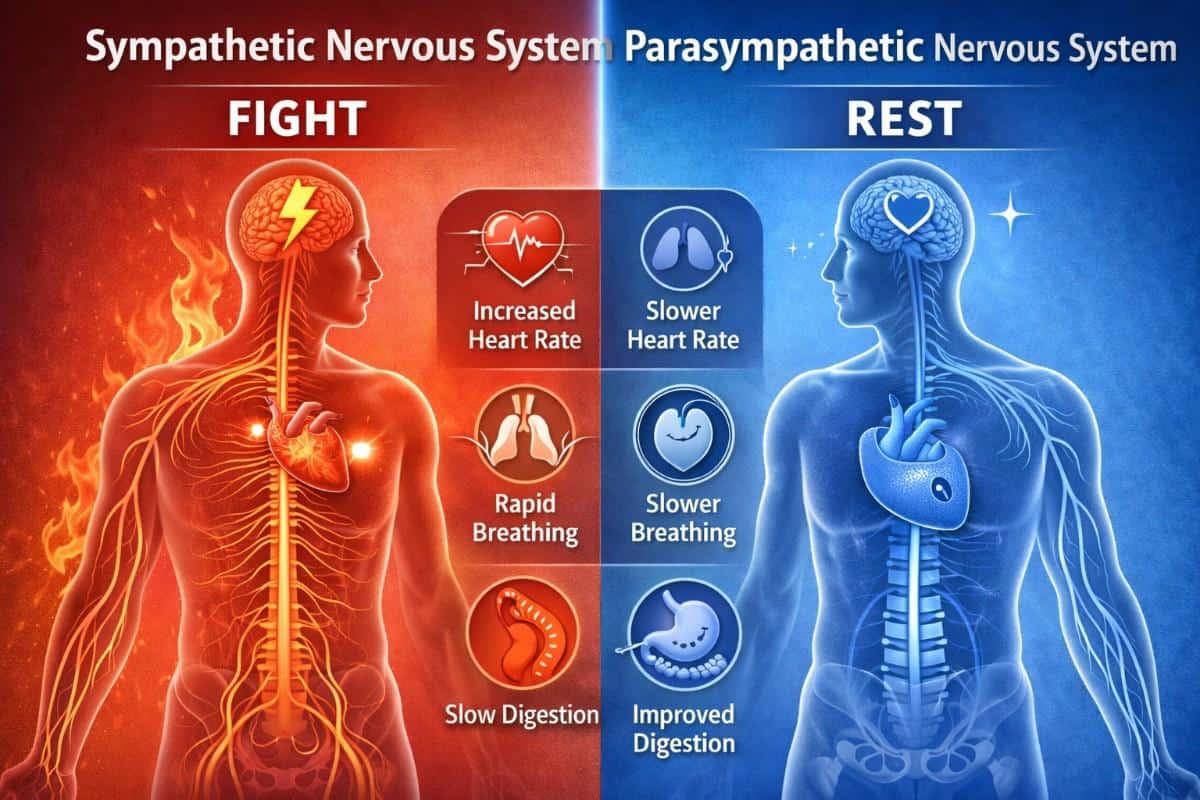
The sympathetic nervous system activates the fight-or-flight response, while the parasympathetic nervous system supports rest, recovery, and digestion.
ANS ka main kaam body ko environment ke according adjust karna hai. Jab brain kisi threat ya stress ko detect karta hai, to body survival mode me chali jaati hai. Aur jab safety feel hoti hai, to body relaxation aur recovery mode me shift ho jaati hai.
Autonomic Nervous System ke do major branches hote hain:
Sympathetic Nervous System
Parasympathetic Nervous System
In dono systems ka balance hi nervous system regulation aur overall health ke liye essential hota hai.
Sympathetic Nervous System (Fight or Flight)
Sympathetic Nervous System ko body ka “gas pedal” kaha jata hai. Jab brain kisi danger, stress ya challenge ko detect karta hai, to yeh system instantly activate ho jata hai. Is process ko commonly fight or flight response kaha jata hai.
Is state me body survival ke liye prepare ho jaati hai. Brain stress hormones jaise adrenaline aur cortisol release karta hai, jisse body alert aur ready ho jaati hai.
Sympathetic activation ke effects:
Heart rate fast ho jata hai
Breathing rapid ho jaati hai
Muscles tight ho jaate hain
Blood pressure increase hota hai
Body energy mobilize karti hai
Yeh response emergency situations me useful hota hai, lekin agar sympathetic system long time tak constantly active rahe, to body chronic stress aur nervous system dysregulation experience kar sakti hai.
Parasympathetic Nervous System (Rest and Repair)
Parasympathetic Nervous System body ka “brake pedal” hai. Jab brain ko signal milta hai ki environment safe hai, to yeh system activate ho jata hai aur body ko calm state me le aata hai.
Is state ko aksar rest and digest mode bhi kaha jata hai, kyunki is time body repair aur recovery processes par focus karti hai.
Parasympathetic activation ke effects:
Heart rate slow ho jata hai
Breathing calm aur steady ho jaati hai
Digestion improve hota hai
Muscles relax ho jaate hain
Body healing aur recovery mode me chali jaati hai
Healthy nervous system ka matlab hai ki body sympathetic aur parasympathetic systems ke beech smoothly switch kar sake. Jab yeh balance maintain hota hai, tab body stress ko effectively handle kar pati hai aur wapas calm state me aa jati hai.
The Neuroscience of Stress
Stress sirf ek emotional feeling nahi hai — yeh actually brain aur nervous system ka biological response hai. Jab body kisi threat, pressure ya uncertainty ko detect karti hai, to brain instantly survival mechanisms activate kar deta hai.
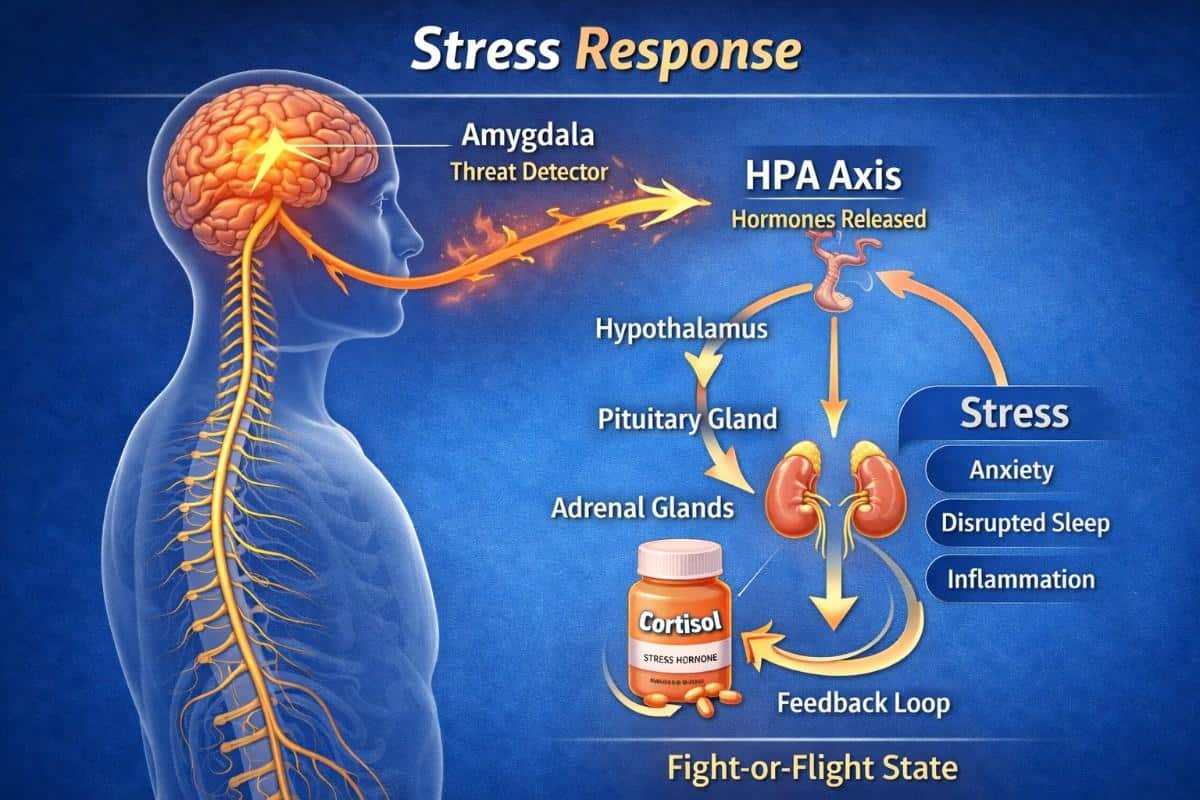
The amygdala activates the HPA axis, which releases cortisol and triggers the body’s stress response.
Neuroscience ke according stress response mainly teen important systems se control hota hai: amygdala, HPA axis aur vagus nerve. Yeh systems milkar decide karte hain ki body ko alert mode me jana hai ya calm state me return karna hai.
Agar yeh stress response short time ke liye activate ho to yeh helpful hota hai, kyunki body ko danger se deal karne me help milti hai. Lekin jab yeh system long time tak active rehta hai, to nervous system dysregulation develop ho sakta hai. Isi wajah se anxiety, overthinking aur chronic stress jaise symptoms appear hone lagte hain.
Amygdala brain ka ek small lekin extremely powerful structure hai jo threat detection system ki tarah kaam karta hai. Iska main role environment ko scan karna aur identify karna hota hai ki koi situation safe hai ya dangerous.
Jab amygdala kisi potential threat ko detect karta hai, to yeh instantly body ko alert signal bhejta hai. Yeh signal brain ke dusre parts ko activate karta hai jisse body survival mode me shift ho jaati hai.
Amygdala activation ke baad body me kuch immediate changes hote hain:
Heart rate increase ho jata hai
Breathing fast ho jaati hai
Muscles tense ho jaate hain
Mind hyper-alert ho jata hai
Yeh process evolutionary perspective se useful hai, kyunki yeh body ko quickly react karne ke liye prepare karta hai. Lekin modern lifestyle me amygdala kabhi-kabhi normal situations ko bhi threat samajh leta hai, jisse chronic stress develop ho sakta hai.
HPA Axis and Cortisol Stress Loop
HPA Axis ka full form hai Hypothalamus–Pituitary–Adrenal Axis. Yeh brain aur endocrine system ka ek important communication network hai jo stress response ko regulate karta hai.
Jab amygdala threat detect karta hai, to HPA axis activate ho jata hai. Is process me hypothalamus aur pituitary gland adrenal glands ko signal bhejte hain ki stress hormones release kiye jayein.
Sabse important stress hormone hai cortisol. Cortisol body ko temporary energy boost deta hai aur survival situations me helpful hota hai. Lekin agar cortisol levels lambe samay tak high rahein, to body par negative effects ho sakte hain.
Chronic cortisol elevation ke effects:
Sleep disturbance
Anxiety aur irritability
Fatigue aur brain fog
Digestive issues
Isi process ko kabhi-kabhi stress loop bhi kaha jata hai, jahan body repeatedly stress response activate karti rehti hai.
Vagus Nerve and Parasympathetic Activation
Vagus nerve nervous system ka ek major nerve hai jo brain aur body ke kai organs ko connect karta hai. Yeh nerve parasympathetic nervous system ka main component hai aur body ko calm state me laane me important role play karta hai.
Jab vagus nerve activate hoti hai, to body gradually stress mode se relaxation mode me shift hone lagti hai. Is process ko parasympathetic activation kaha jata hai.
Vagus nerve activation ke effects:
Heart rate slow ho jata hai
Breathing deep aur steady ho jaati hai
Muscles relax ho jaate hain
Mind calm feel karta hai
Breathing exercises, meditation, nature exposure aur slow movement jaise practices vagus nerve ko stimulate kar sakte hain. Isi wajah se yeh techniques nervous system regulation aur stress recovery me powerful tool mani jati hain.
Modern Lifestyle and Nervous System Dysregulation
Modern lifestyle ne human nervous system par constant pressure aur stimulation create kar diya hai. Hamara nervous system originally is tarah design hua tha ki stress short-term ho aur uske baad body wapas calm state me aa jaye. Lekin aaj ke digital environment me brain ko baar-baar stress signals milte rehte hain.
Notifications, poor sleep habits aur excessive stimulants jaise caffeine body ko sympathetic nervous system (fight or flight) mode me rakh sakte hain. Jab yeh state lambe samay tak active rahti hai, to nervous system gradually dysregulated ho sakta hai. Iska result hota hai overthinking, anxiety, fatigue aur poor concentration.
Modern lifestyle ke kuch common factors nervous system imbalance ko trigger karte hain.
Constant Notifications and Digital Overload
Smartphones aur social media ke era me brain ko continuous information aur stimulation milta rehta hai. Har notification brain ko ek micro-stress signal bhej sakta hai, jisse attention baar-baar shift hoti hai.
Jab mind constantly alert rehta hai, to nervous system ko relaxation ka proper time nahi milta. Isse brain gradually hyper-vigilant state me rehne lagta hai.
Digital overload ke common effects:
Attention span reduce hona
Mental fatigue aur brain fog
Overthinking aur restlessness
Stress hormone levels increase hona
Digital balance create karna nervous system regulation ke liye important step hai.
Poor Sleep and Circadian Rhythm Disruption
Sleep nervous system recovery ka sabse important biological process hai. Deep sleep ke dauran brain toxins clear karta hai aur body repair mode me chali jaati hai.
Lekin late-night screen use, irregular sleep schedule aur artificial light circadian rhythm ko disturb kar sakte hain. Jab circadian rhythm imbalance ho jata hai, to cortisol levels increase ho sakte hain aur nervous system stress state me reh sakta hai.
Poor sleep ke effects:
Low energy aur fatigue
Anxiety aur irritability
Focus aur memory problems
Stress tolerance reduce hona
Healthy sleep routine nervous system regulation ke liye essential hai.
Caffeine Overload and Stress Hormones
Caffeine ek powerful stimulant hai jo nervous system ko temporarily alert aur energetic feel karata hai. Moderate amount me caffeine safe ho sakta hai, lekin excessive intake sympathetic nervous system activation increase kar sakta hai.
High caffeine consumption cortisol aur adrenaline release ko trigger kar sakta hai. Agar body already stress state me hai, to caffeine nervous system ko aur overstimulate kar sakta hai.
Excess caffeine ke possible effects:
Heart rate increase hona
Anxiety aur jitteriness
Sleep disturbance
Nervous system overstimulation
Caffeine intake ko balanced rakhna aur body ke natural energy rhythms ko respect karna nervous system health ke liye important hai.
Fight – Flight – Freeze – Fawn Response Explained
Jab brain kisi situation ko dangerous ya stressful perceive karta hai, to body automatically ek survival mechanism activate karti hai. Isko stress response system ya survival response kaha jata hai. Yeh response amygdala aur autonomic nervous system ke through trigger hota hai, jisse body turant react karne ke liye prepare ho jaati hai.
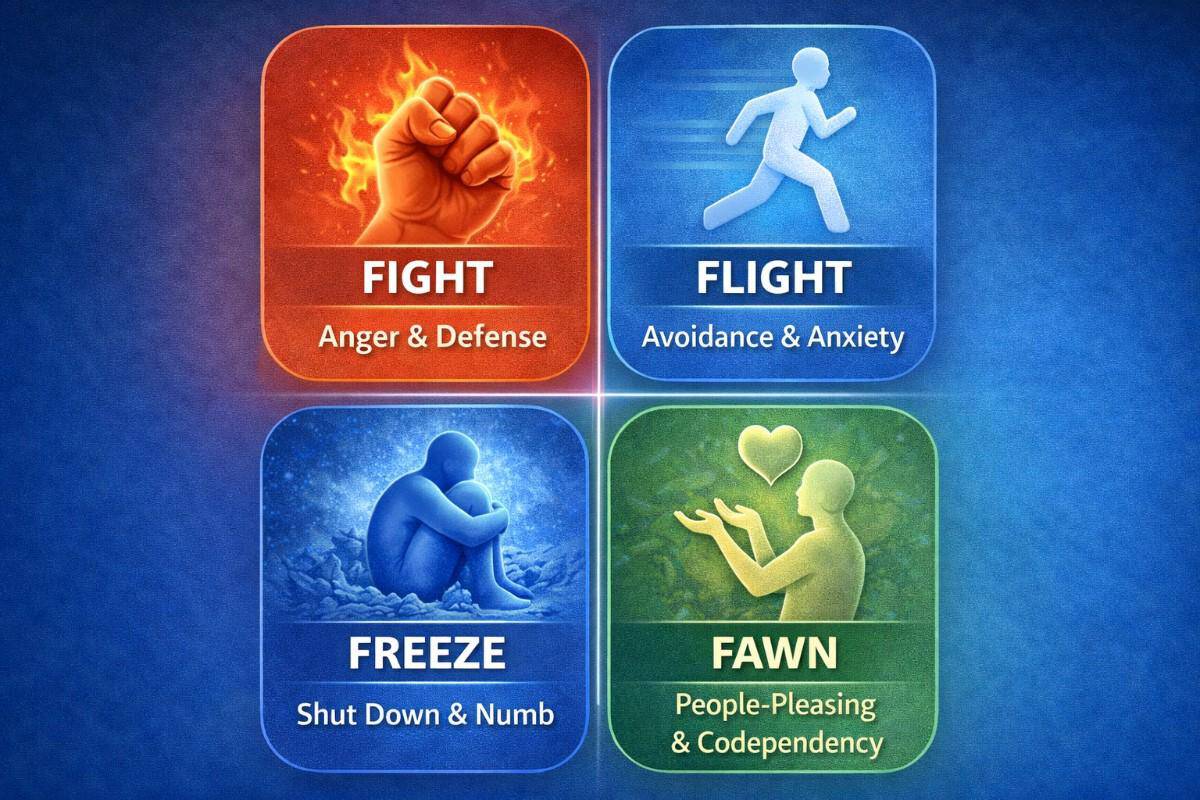
The nervous system reacts to stress through four survival responses: fight, flight, freeze, and fawn.
Traditionally log fight ya flight response ke baare me jaante hain, lekin modern psychology aur trauma research ke according stress response ke chaar main patterns hote hain: fight, flight, freeze aur fawn.
Yeh responses body ka natural protective mechanism hain. Inka purpose danger se bachna aur survival chances ko increase karna hota hai. Lekin jab nervous system chronic stress me rehta hai, to yeh responses normal daily situations me bhi activate ho sakte hain.
Fight Response
Fight response tab activate hota hai jab brain decide karta hai ki danger ka directly confront karna best option hai. Is state me body energy aur strength mobilize karti hai taaki person threat ka saamna kar sake.
Fight response me sympathetic nervous system activate hota hai aur adrenaline release hota hai. Isse body powerful aur alert feel karti hai.
Common fight response behaviors:
Anger ya irritability feel hona
Argumentative ya defensive reaction
Control ya dominance show karna
Frustration aur impulsive reactions
Short-term emergency situations me yeh response helpful ho sakta hai, lekin agar yeh pattern frequently activate ho jaye to relationship conflicts aur emotional stress increase ho sakta hai.
Flight Response
Flight response ka matlab hai danger se door bhaagna ya escape karna. Jab brain perceive karta hai ki confrontation safe nahi hai, to body situation se distance create karne ki koshish karti hai.
Is state me body hyper-alert ho jati hai aur mind escape strategies par focus karta hai.
Common flight response patterns:
Overworking ya constant busyness
Avoidance behavior
Overthinking aur worry
Restlessness aur anxiety
Flight response ka main goal threat se physical ya emotional distance create karna hota hai. Lekin chronic flight pattern long-term anxiety aur burnout create kar sakta hai.
Freeze Response
Freeze response tab activate hota hai jab brain ko lagta hai ki na fight possible hai na flight. Is situation me body temporarily shutdown ya immobilization state me chali jaati hai.
Yeh response evolutionary survival mechanism hai jahan body energy conserve karti hai aur threat ko pass hone ka wait karti hai.
Freeze response ke signs:
Emotional numbness
Difficulty taking action
Brain fog ya mental blankness
Feeling stuck ya helpless
Chronic freeze state nervous system dysregulation ka sign ho sakti hai jahan person ko motivation aur energy low feel hoti hai.
Fawn Response
Fawn response relatively less known stress response hai. Yeh tab activate hota hai jab person conflict ya danger se bachne ke liye people-pleasing behavior adopt karta hai.
Is response me nervous system safety create karne ke liye dusron ko please karne ya unke expectations follow karne ki tendency develop kar sakta hai.
Fawn response ke common patterns:
Excessive people pleasing
Boundaries set karne me difficulty
Conflict avoid karna
Dusron ki needs ko apni needs se upar rakhna
Long-term me yeh pattern emotional exhaustion aur identity confusion create kar sakta hai.
In chaar stress responses ko samajhna important hai kyunki yeh batate hain ki nervous system stress aur danger ko kaise process karta hai. Awareness ke through hi nervous system regulation aur recovery ka process start hota hai.
What Is a Nervous System Reset?
A nervous system reset ka matlab hai body ko chronic stress state se nikal kar wapas calm, balanced aur regulated state me lana. Jab nervous system lambe samay tak stress, pressure ya emotional overload experience karta hai, to body survival mode me operate karne lagti hai. Is state me sympathetic nervous system frequently active rehta hai aur body ko relax hone ka mauka kam milta hai.
Nervous system reset ka purpose body ko wapas parasympathetic “rest and repair” mode me lana hota hai. Is process me breathing techniques, lifestyle habits, nutrition aur relaxation practices use ki jaati hain jisse brain ko safety signals milte hain. Jab body repeatedly safety aur calm experiences feel karti hai, to nervous system gradually regulate hone lagta hai.
Nervous System Reset Ka Meaning
Simple words me nervous system reset ka matlab hai body ke stress response ko balance karna. Yeh koi ek single technique nahi hai, balki practices ka combination hota hai jo nervous system ko calm aur stable banata hai.
Jab nervous system reset hota hai, to brain threat detection mode se bahar aakar relaxation aur recovery state me shift karta hai. Isse mind clear feel karta hai aur body naturally relaxed ho jaati hai.
Nervous system reset ke kuch common benefits:
Anxiety aur stress levels reduce hona
Sleep quality improve hona
Emotional stability increase hona
Focus aur mental clarity better hona
Regular regulation practices ke through body gradually apna natural balance restore kar sakti hai.
Body Ko Reset Ki Zarurat Kyun Hoti Hai
Modern lifestyle me nervous system ko constant stress signals milte rehte hain. Work pressure, digital overload, poor sleep aur emotional challenges brain ko repeatedly alert state me rakh sakte hain. Jab body ko relaxation ka proper time nahi milta, to nervous system dysregulated ho sakta hai.
Is condition me body me kuch common symptoms appear ho sakte hain:
Overthinking aur anxiety
Chronic fatigue
Brain fog aur poor concentration
Sleep disturbance
Emotional reactivity
Nervous system reset practices body ko gradually wapas safety aur balance me lane me help karti hain. Jab nervous system regulated hota hai, to body stress ko better handle kar pati hai aur overall wellbeing improve hoti hai.
7 Hidden Signs Your Nervous System Needs a Reset
Kabhi-kabhi body hume clear signal deti hai ki nervous system overload ya dysregulated ho chuka hai. Problem yeh hai ki log in signals ko alag-alag health issues samajh lete hain — jaise fatigue, anxiety ya sleep problems.
Lekin neuroscience ke according yeh symptoms aksar chronic stress aur nervous system imbalance ke signs ho sakte hain. Jab body lambe samay tak sympathetic “fight or flight” mode me rehti hai, to mind aur body dono par iska effect dikhne lagta hai.
Agar aap inme se kai signs regularly experience kar rahe hain, to ho sakta hai aapke nervous system ko reset aur regulation practices ki zarurat ho.
Overthinking
Overthinking nervous system dysregulation ka common sign hai. Jab brain threat detection mode me rehta hai, to mind constantly problems aur worst-case scenarios analyze karta rehta hai.
Is state me amygdala overactive ho sakta hai, jisse brain normal situations ko bhi potential danger samajhne lagta hai. Result yeh hota hai ki mind continuously thoughts repeat karta rehta hai aur relaxation difficult ho jata hai.
Common experiences:
Ek hi thought ko baar-baar analyze karna
Future situations ko lekar excessive worry
Mind ka constantly alert feel karna
If you often feel trapped in constant thoughts, learningOverthinking Se Kaise Bahar Niklein can help calm your mind and regulate your nervous system.
Chronic Fatigue
Agar aapko rest karne ke baad bhi tired feel hota hai, to yeh chronic fatigue ka sign ho sakta hai. Jab body lambe samay tak stress hormones release karti hai, to nervous system gradually energy drain feel karta hai.
Initially stress energy boost de sakta hai, lekin long-term me body burnout aur exhaustion experience kar sakti hai.
Common signs:
Subah uthte hi tired feel karna
Din bhar low energy
Simple tasks bhi exhausting lagna
Brain Fog
Brain fog ek aisi condition hai jisme mind slow, unclear aur unfocused feel karta hai. Stress ke dauran brain ka cognitive functioning temporarily impact ho sakta hai.
Jab nervous system survival mode me hota hai, to brain logical thinking ke bajaye threat detection aur quick reactions par focus karta hai. Is wajah se concentration aur memory weak feel ho sakti hai.
Typical experiences:
Focus maintain karna difficult hona
Information process karne me slow feel hona
Mental clarity kam lagna
Sleep Issues
Sleep aur nervous system regulation deeply connected hote hain. Jab body stress state me hoti hai, to sympathetic nervous system active rehta hai jo mind ko alert rakhta hai.
Is wajah se sleep problems develop ho sakti hain jaise difficulty falling asleep, frequent awakenings ya light sleep.
Sleep related signs:
Raat ko mind ka active rehna
Deep sleep feel na hona
Morning me refreshed feel na karna
Digestive Problems
Digestive system aur nervous system ke beech strong connection hota hai jise gut-brain axis kaha jata hai. Jab body stress me hoti hai, to digestion temporarily slow ya irregular ho sakta hai.
Isliye stress ke time stomach discomfort ya appetite changes feel ho sakte hain.
Common digestive signs:
Bloating ya stomach tightness
Appetite irregular hona
Stress ke time digestion problems
Emotional Reactivity
Nervous system dysregulation emotional reactions ko bhi impact kar sakta hai. Jab brain stress state me hota hai, to emotional response zyada intense feel ho sakta hai.
Choti situations bhi strong reactions trigger kar sakti hain kyunki nervous system hyper-alert state me hota hai.
Common patterns:
Choti baaton par irritation
Sudden mood swings
Emotional overwhelm feel hona
Feeling Constantly On Edge
Agar aapko lagta hai ki body kabhi fully relax nahi hoti, to yeh nervous system imbalance ka subtle sign ho sakta hai.
Is state me body continuously potential threats scan karti rehti hai. Even jab environment safe ho, tab bhi mind alert feel kar sakta hai.
Possible sensations:
Body me constant tension
Relax karne me difficulty
Mind ka alert ya uneasy feel karna
Agar aap inme se kai signs regularly notice karte hain, to yeh indication ho sakta hai ki body ko nervous system reset practices ki zarurat hai taaki balance aur calm state restore ho sake.
Polyvagal Theory Explained
Polyvagal Theory ek modern neuroscience concept hai jo explain karta hai ki nervous system safety aur danger signals ko kaise detect karta hai. Is theory ko neuroscientist Dr. Stephen Porges ne develop kiya tha.
The Polyvagal Ladder shows how the nervous system shifts between three states: ventral vagal (safe and connected), sympathetic (fight or flight), and dorsal vagal (shutdown).
Is theory ke according nervous system constantly environment ko scan karta rehta hai. Is process ko neuroception kaha jata hai — matlab brain automatically decide karta hai ki situation safe hai ya threatening.
Polyvagal Theory ke hisaab se nervous system ke teen main states hote hain: ventral vagal state, sympathetic state aur dorsal vagal state. In teen states ko samajhna important hai kyunki yeh explain karte hain ki body stress aur relaxation ke beech kaise switch karti hai.
Ventral Vagal State
Ventral vagal state nervous system ka safe aur balanced state hota hai. Jab aap is state me hote hain, to body calm aur relaxed feel karti hai aur mind clear hota hai. Yeh state parasympathetic nervous system se linked hoti hai aur social connection aur emotional stability ko support karti hai.
Is state me brain environment ko safe perceive karta hai, jisse body naturally relaxation aur recovery mode me chali jaati hai.
Ventral vagal state ke common signs:
Calm aur relaxed feeling
Clear thinking aur focus
Healthy social interaction
Emotional balance aur patience
Meditation, slow breathing, nature exposure aur supportive relationships ventral vagal state ko strengthen karne me help kar sakte hain.
Sympathetic State
Sympathetic state tab activate hoti hai jab brain danger ya stress detect karta hai. Is state ko commonly fight-or-flight response kaha jata hai. Isme body survival ke liye prepare ho jaati hai aur stress hormones release hote hain.
Sympathetic activation ke dauran body alert aur energetic feel karti hai, lekin agar yeh state long time tak active rahe to chronic stress develop ho sakta hai.
Sympathetic state ke signs:
Anxiety ya restlessness
Fast heartbeat aur rapid breathing
Irritability ya impatience
Racing thoughts aur overthinking
Yeh response short-term danger situations me useful hota hai, lekin chronic activation nervous system imbalance create kar sakta hai.
Dorsal Vagal State
Dorsal vagal state nervous system ka shutdown ya freeze response hota hai. Yeh tab activate hota hai jab body extreme stress ya helplessness feel karti hai aur brain decide karta hai ki fight ya flight possible nahi hai.
Is state me body energy conserve karti hai aur person emotionally disconnected feel kar sakta hai.
Dorsal vagal state ke common signs:
Emotional numbness
Low motivation aur fatigue
Social withdrawal
Feeling stuck ya disconnected
Long-term dorsal vagal state nervous system dysregulation ka sign ho sakta hai. Gentle movement, supportive social connection aur nervous system regulation practices body ko gradually wapas balanced state me la sakti hain.
7 Daily Habits That Heal Your Nervous System
Nervous system healing koi ek single technique se nahi hoti. Yeh daily small habits aur consistent lifestyle practices ka result hota hai. Jab body ko regular safety signals milte hain, to nervous system gradually stress mode se calm aur regulated state me shift hone lagta hai.
Modern lifestyle me nervous system ko bahut stimulation milta hai, isliye intentional habits develop karna zaroori ho jata hai. Simple daily practices jaise sunlight exposure, movement, breathing aur proper sleep nervous system regulation me powerful role play kar sakte hain.
Neeche diye gaye habits body ko parasympathetic “rest and repair” mode activate karne me help karte hain aur long-term emotional balance support karte hain.
Morning Sunlight
Subah ki natural sunlight circadian rhythm ko regulate karne me important role play karti hai. Jab aap morning light exposure lete hain, to brain ko signal milta hai ki day start ho chuka hai. Yeh body ke internal clock ko balance karta hai aur hormone regulation improve karta hai.
Morning sunlight mood ko improve karti hai aur energy levels ko stable banati hai. Regular sunlight exposure nervous system ko calm aur balanced state me maintain karne me help karta hai.
Helpful habit
Subah 10–20 minutes sunlight exposure lein
Morning walk sunlight ke saath combine karein
Gentle Movement
Gentle movement jaise walking, yoga aur stretching nervous system ko safe movement signals bhejte hain. Regular physical movement stress hormones ko reduce karta hai aur body me tension release karta hai.
Movement blood circulation improve karta hai aur brain ko relaxation signals bhejta hai. Slow aur mindful movement nervous system regulation ke liye especially effective hota hai.
Examples
Slow walking
Light yoga practice
Simple stretching exercises
Digital Detox
Constant notifications aur screen exposure brain ko continuous alert state me rakh sakte hain. Digital overload nervous system ko rest ka proper time nahi deta.
Regular digital detox nervous system ko mental recovery ka opportunity deta hai aur mind ko calm feel karne me help karta hai.
Simple practices
Daily screen-free breaks lein
Sleep se 1 hour pehle devices avoid karein
Body Relaxation
Body relaxation techniques muscles me stored tension ko release karti hain. Progressive muscle relaxation, yoga aur gentle stretching body ko calm signals bhejte hain aur nervous system ko relax state me shift karte hain.
Regular relaxation practices stress response ko reduce karne me help karti hain aur body ko recovery mode me le aati hain.
Try these
Progressive muscle relaxation
Gentle yoga
Body scanning meditation
Consistent Sleep
Sleep nervous system healing ka sabse important factor hai. Deep sleep ke dauran brain toxins clear karta hai aur body repair processes activate hoti hain.
Agar sleep routine irregular ho, to stress hormones increase ho sakte hain aur nervous system dysregulated feel kar sakta hai.
Better sleep habits
Same time par sona aur uthna
Bedtime se pehle calming routine follow karna
Mindful Breathing
Breathing nervous system regulation ka fastest tool hai. Slow aur deep breathing vagus nerve ko stimulate karti hai, jisse parasympathetic nervous system activate hota hai.
Mindful breathing practice body ko relaxation state me shift karti hai aur stress response ko gradually reduce karti hai.
Simple technique
4 seconds inhale
6 seconds exhale
5 minutes repeat
Time in Nature
Nature exposure nervous system ko naturally calm karta hai. Green environments me time spend karna stress hormones ko reduce kar sakta hai aur emotional wellbeing improve karta hai.
Nature ke contact me rehne se brain ko safety aur relaxation signals milte hain.
Simple ways
Nature walk
Park me quiet sitting
Gardening
Regularly nature ke saath time spend karna nervous system ko balanced aur regulated state me maintain karne me help karta hai.
5 Powerful Breathing Techniques to Reset the Nervous System
Breathing nervous system regulation ka sabse simple aur powerful tool hai. Jab body stress me hoti hai, to breathing automatically fast aur shallow ho jaati hai. Yeh pattern sympathetic nervous system ko activate karta hai, jisse body alert aur tense feel karti hai.
Lekin jab aap slow aur controlled breathing techniques practice karte hain, to vagus nerve stimulate hoti hai aur parasympathetic nervous system activate ho jata hai. Isse heart rate calm hota hai, muscles relax hote hain aur mind gradually peaceful feel karta hai.
Regular breathing exercises nervous system ko stress mode se rest and repair mode me shift karne me help karti hain. Neeche kuch effective breathing techniques di gayi hain jo nervous system reset ke liye widely use ki jaati hain.
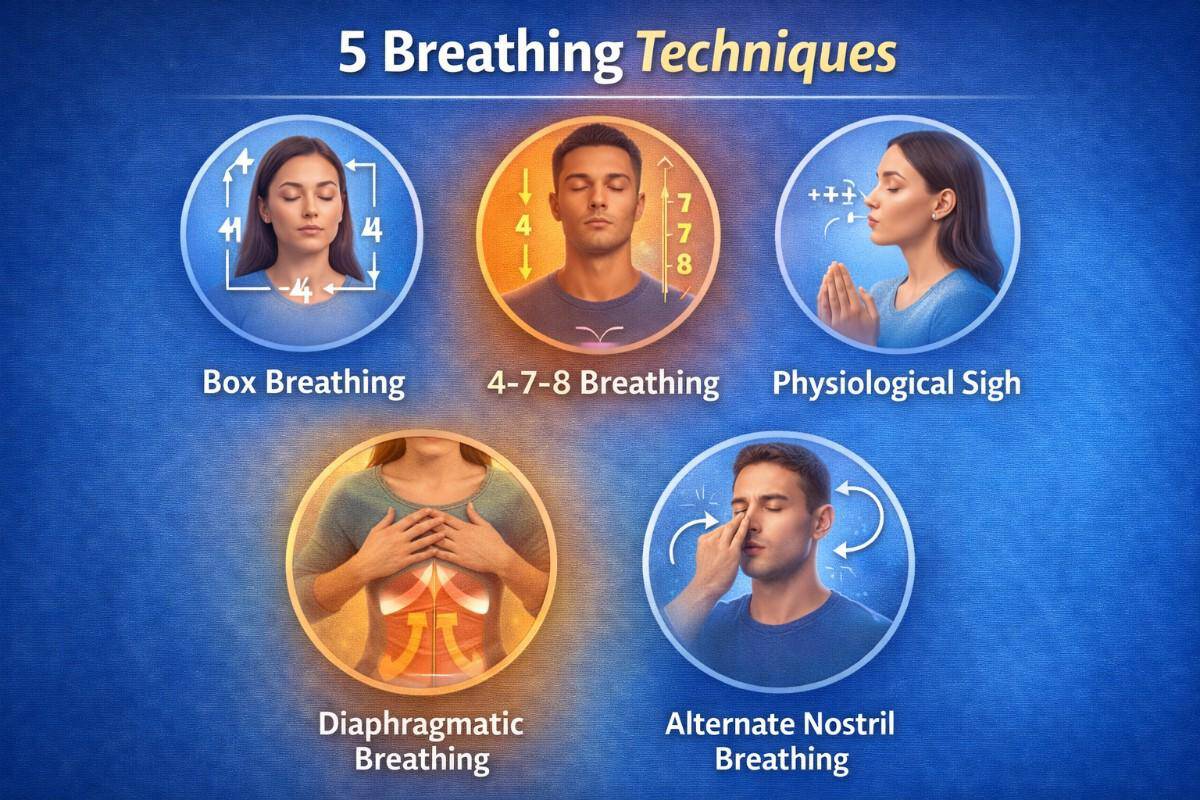
These breathing techniques help activate the parasympathetic nervous system and quickly calm the stress response.
Box Breathing
Box breathing ek structured breathing technique hai jisme inhale, hold aur exhale ka pattern equal timing me hota hai. Yeh technique nervous system ko stabilize karne aur stress ko quickly reduce karne me help karti hai.
Is practice ko athletes, military professionals aur therapists bhi focus aur emotional regulation ke liye use karte hain.
Kaise practice karein
4 seconds inhale karein
4 seconds breath hold karein
4 seconds exhale karein
4 seconds hold karein
Is cycle ko 4–5 minutes tak repeat karein. Yeh breathing rhythm heart rate ko balance karta hai aur mind ko calm karne me help karta hai.
Physiological Sigh
Physiological sigh ek science-backed breathing technique hai jo body me accumulated tension ko release karne me help karti hai. Yeh breathing pattern lungs me oxygen balance ko restore karta hai aur nervous system ko relaxation signal bhejta hai.
Yeh technique quick stress relief ke liye especially effective mani jaati hai.
Practice method
Nose se ek deep inhale lein
Turant ek chota second inhale karein
Mouth se slow aur long exhale karein
Is process ko 3–5 baar repeat karne se body ka stress response gradually calm ho sakta hai.
Diaphragmatic Breathing
Diaphragmatic breathing ko belly breathing bhi kaha jata hai. Is technique me breathing chest ke bajaye diaphragm aur belly area se hoti hai. Yeh breathing pattern nervous system ko relax state me shift karne me help karta hai.
Deep diaphragmatic breathing oxygen supply improve karti hai aur body ko calm signals bhejti hai.
Practice steps
Comfortable position me baith jaayein
Nose se slow inhale lein
Belly ko expand hone dein
Mouth se slow exhale karein
Roz 5–10 minutes practice karne se nervous system gradually regulate hone lagta hai.
4-7-8 Breathing
4-7-8 breathing technique relaxation aur sleep improvement ke liye widely recommended hai. Yeh breathing pattern mind ko slow karta hai aur body ko deep relaxation state me le jata hai.
Is technique ko bedtime routine me include karna sleep quality improve kar sakta hai.
Steps
4 seconds inhale
7 seconds breath hold
8 seconds slow exhale
Is cycle ko 4–6 times repeat karein. Regular practice se mind calm aur body relaxed feel kar sakti hai.
Alternate Nostril Breathing
Alternate nostril breathing ek traditional yogic pranayama technique hai jo nervous system ko balance karne me help karti hai. Yeh breathing practice brain ke left aur right hemispheres ke beech balance create karti hai aur mental clarity improve karti hai.
Is technique ko Nadi Shodhana bhi kaha jata hai aur yeh relaxation aur focus dono ko support karti hai.
Practice method
Right nostril ko finger se band karein aur left nostril se inhale karein
Left nostril band karke right nostril se exhale karein
Right nostril se inhale karein aur left se exhale karein
Is pattern ko 3–5 minutes tak repeat karein. Yeh breathing technique mind ko calm aur balanced feel karne me help karti hai.
10 Foods That Calm and Regulate the Nervous System
Nervous system health sirf mental practices se hi nahi, balki proper nutrition se bhi deeply connected hoti hai. Brain aur nervous system ko efficiently function karne ke liye specific nutrients ki zarurat hoti hai jaise magnesium, omega-3 fatty acids, B-vitamins aur antioxidants.
Agar diet me yeh nutrients kam ho jayein, to stress response zyada intense ho sakta hai aur body ko relax hone me difficulty ho sakti hai. Isliye balanced nutrition nervous system regulation ka important part hai.
Kuch foods naturally body ko calm karne aur emotional balance support karne me help karte hain. Yeh foods brain chemistry ko support karte hain, inflammation reduce karte hain aur stress hormones ko regulate karne me madad karte hain.
Magnesium Rich Foods
Magnesium nervous system ke liye sabse important calming minerals me se ek mana jata hai. Yeh muscles aur nerves ko relax karne me help karta hai aur stress response ko reduce kar sakta hai. Magnesium deficiency anxiety, muscle tension aur sleep problems se linked ho sakti hai.
Magnesium rich foods body ko naturally calm feel karne me help karte hain aur nervous system regulation support karte hain.
Examples
Pumpkin seeds
Almonds
Spinach
Dark chocolate
Cashews
Regular magnesium intake muscles ko relax karta hai aur sleep quality improve karne me bhi helpful ho sakta hai.
Omega-3 Foods
Omega-3 fatty acids brain health ke liye extremely important nutrients hain. Yeh inflammation reduce karte hain aur mood regulation me key role play karte hain. Research suggest karti hai ki omega-3 fatty acids emotional balance aur cognitive function support karte hain.
Omega-3 rich foods nervous system ko stable aur healthy rakhne me help karte hain.
Examples
Walnuts
Flax seeds
Chia seeds
Fatty fish (salmon, sardines)
Hemp seeds
Regular omega-3 intake brain cells ki functioning improve karta hai aur stress response ko balance karne me help kar sakta hai.
Adaptogenic Herbs
Adaptogens aise natural herbs hote hain jo body ko stress ke saath adapt karne me help karte hain. Yeh herbs nervous system ko support karte hain aur body ko stress hormones ke effects se protect karne me madad karte hain.
Adaptogenic herbs traditional medicine systems jaise Ayurveda aur herbal medicine me long time se use kiye ja rahe hain.
Common adaptogens
Ashwagandha
Tulsi (Holy Basil)
Rhodiola
Ginseng
Yeh herbs energy balance aur emotional resilience ko support kar sakte hain.
Fermented Foods
Fermented foods gut health improve karte hain aur nervous system ke saath ek important connection share karte hain jise gut-brain axis kaha jata hai. Healthy gut bacteria mood aur stress regulation me important role play karte hain.
Fermented foods beneficial probiotics provide karte hain jo digestion aur emotional wellbeing dono ko support kar sakte hain.
Examples
Yogurt
Kefir
Kimchi
Sauerkraut
Fermented vegetables
Healthy gut environment brain aur nervous system ke liye positive signals create karta hai.
Complex Carbohydrates
Complex carbohydrates body ko steady energy supply dete hain aur blood sugar levels ko stable rakhne me help karte hain. Stable blood sugar nervous system regulation ke liye important hai, kyunki sudden spikes aur crashes stress response ko trigger kar sakte hain.
Complex carbs serotonin production ko bhi support karte hain, jo mood regulation ke liye important neurotransmitter hai.
Examples
Oats
Brown rice
Sweet potatoes
Whole grains
Quinoa
Balanced complex carbohydrates diet body ko calm energy provide karti hai aur nervous system ko stable banaye rakhne me help karti hai.
AHO Nervous System Reset Framework
Nervous system healing ek single technique se nahi hoti. Yeh ek step-by-step process hai jisme awareness, healing practices aur lifestyle optimization ka combination use kiya jata hai. Isi approach ko samajhne ke liye AHO Nervous System Reset Framework ek simple aur practical model provide karta hai.
AHO ka matlab hai Awareness, Healing aur Optimization. Yeh framework nervous system regulation ke teen important stages ko represent karta hai. Pehla stage awareness ka hota hai jahan aap apne stress patterns ko samajhte hain. Dusra stage healing practices ka hota hai jahan body ko calm aur regulated state me laane ke liye techniques apply ki jaati hain. Teesra stage optimization ka hota hai jahan lifestyle habits ko improve karke long-term nervous system balance maintain kiya jata hai.
Awareness
Awareness nervous system healing ka first aur most important step hai. Jab tak aap apne stress triggers aur body signals ko samajh nahi paate, tab tak regulation difficult ho sakta hai. Awareness ka matlab hai apni body aur emotions ko observe karna aur identify karna ki kaun si situations stress response activate karti hain.
Is stage me aap gradually notice karna start karte hain ki aapka nervous system kab fight, flight ya freeze mode me shift ho jata hai. Awareness practice se aap body ke subtle signals ko bhi samajhne lagte hain.
Helpful awareness practices
Daily self-reflection ya journaling
Body sensations observe karna
Emotional triggers ko identify karna
Mindfulness meditation practice
Awareness develop hone par nervous system regulation ka process naturally start ho jata hai.
Healing Practices
Healing stage me focus hota hai body ko calm aur regulated state me lana. Is stage me different nervous system regulation techniques use ki jaati hain jo stress response ko reduce karti hain aur parasympathetic system activate karti hain.
Breathing exercises, gentle movement aur relaxation practices body ko safety signals bhejte hain. Jab yeh practices regularly ki jaati hain, to nervous system gradually chronic stress state se bahar aane lagta hai.
Common healing practices
Deep breathing techniques
Meditation aur mindfulness
Gentle yoga ya stretching
Nature exposure
Consistent healing practices nervous system ko gradually rest and repair mode me shift karne me help karti hain.
Optimization
Optimization stage nervous system healing ka long-term maintenance phase hota hai. Is stage me focus hota hai lifestyle habits ko optimize karna taaki nervous system balanced state me rahe.
Healthy routines jaise proper sleep, balanced nutrition aur regular movement nervous system regulation ko sustain karne me help karte hain. Optimization ka goal yeh hota hai ki body stress ko better handle kare aur quickly calm state me return kar sake.
Key optimization habits
Consistent sleep schedule
Balanced and nutrient-rich diet
Regular physical activity
Digital detox aur relaxation time
Jab awareness, healing practices aur optimization habits ek saath combine hote hain, to nervous system gradually stable, resilient aur balanced state me shift hone lagta hai.
21-Day Nervous System Reset Plan
Nervous system reset ek gradual process hai. Body ko chronic stress state se bahar aane aur calm, regulated state me shift hone ke liye consistent daily practices ki zarurat hoti hai. Isi purpose ke liye ek simple aur practical 21-day nervous system reset plan follow kiya ja sakta hai.
Research aur behavioral science ke according 21 days tak kisi new habit ko practice karne se brain me new neural patterns develop hone lagte hain. Is plan ka goal hai body ko step-by-step stress mode se nikal kar safety, relaxation aur emotional stability ki taraf le jana.
Yeh plan teen phases me divided hai. Har week ka focus alag hota hai — pehle stress response ko calm karna, phir safety signals rebuild karna aur finally emotional resilience develop karna.
Week 1 – Calm the Stress Response
First week ka main focus hai body ke overactive stress response ko calm karna. Jab nervous system lambe samay tak fight-or-flight mode me rehta hai, to body ko relaxation ka signal milna zaroori hota hai.
Is phase me simple calming practices use ki jaati hain jo vagus nerve ko stimulate kar sakti hain aur parasympathetic nervous system activate karti hain. Slow breathing, gentle movement aur sunlight exposure jaise habits nervous system ko gradually relaxation state me shift karne me help karte hain.
Week 1 focus habits
Morning sunlight exposure
5–10 minutes slow breathing practice
Gentle walking ya stretching
Screen time reduce karna
Evening relaxation routine
Yeh practices body ko signal deti hain ki environment safe hai aur stress response gradually calm hone lagta hai.
Week 2 – Rebuild Safety Signals
Second week ka goal hai brain ko repeated safety signals dena. Jab body ko baar-baar calm aur safe experiences milte hain, to nervous system gradually regulate hone lagta hai.
Is phase me grounding practices aur mindful activities helpful hoti hain. Nature exposure, gratitude journaling aur mindful breathing body ko relaxation signals bhejte hain aur emotional stability improve karte hain.
Week 2 focus habits
Daily nature walk ya outdoor time
Gratitude journaling practice
Deep belly breathing exercises
Mindful eating
Digital detox periods
Regular safety signals brain ko yeh message dete hain ki body ko constantly alert rehne ki zarurat nahi hai.
Week 3 – Build Emotional Resilience
Third week ka focus hai long-term nervous system resilience develop karna. Jab body calm state me rehna seekh leti hai, tab next step emotional flexibility aur stress tolerance build karna hota hai.
Is phase me meditation, moderate exercise aur self-reflection practices helpful ho sakti hain. Yeh habits brain ko stronger regulation patterns develop karne me support karti hain.
Week 3 focus habits
10–15 minutes daily meditation
Moderate exercise ya brisk walking
Evening digital detox
Self-reflection journaling
Consistent sleep routine
Is stage ke baad nervous system gradually balanced aur resilient state me shift hone lagta hai, jisse body stress situations ko better handle kar pati hai aur emotional wellbeing improve hoti hai.
Common Mistakes That Keep Your Nervous System Stuck
Nervous system ko regulate karna sirf healing practices karne se hi possible nahi hota. Kabhi-kabhi kuch daily habits aur lifestyle patterns bhi hote hain jo nervous system ko chronic stress mode me fasa kar rakhte hain. Agar body ko baar-baar stress signals milte rahein, to nervous system ko calm aur balanced state me shift hone ka mauka nahi milta.
Bahut log breathing exercises, meditation ya healthy diet follow karte hain, lekin agar unki lifestyle habits stress ko continuously trigger kar rahi hain, to recovery slow ho sakti hai. Isliye nervous system reset ke process me un habits ko identify karna bhi important hai jo dysregulation ko maintain karti hain.
Neeche kuch common mistakes di gayi hain jo nervous system ko stuck state me rakh sakti hain.
Overstimulation
Modern lifestyle me overstimulation ek major factor hai jo nervous system ko constantly alert state me rakhta hai. Smartphones, social media notifications, loud environments aur continuous information flow brain ko constant stimulation dete rehte hain.
Jab mind ko proper rest nahi milta, to nervous system sympathetic mode me rehne lagta hai. Isse mental fatigue, anxiety aur focus problems develop ho sakte hain.
Common overstimulation patterns:
Constant phone checking
Social media scrolling for long hours
Multitasking aur information overload
Regular digital breaks aur calm environments nervous system ko relaxation signals dene me help karte hain.
Sleep Neglect
Sleep nervous system recovery ke liye sabse important biological process hai. Deep sleep ke dauran brain toxins clear karta hai aur body repair mode me chali jaati hai.
Lekin late-night screen use, irregular sleep schedule aur sleep deprivation nervous system ko stress state me rakh sakte hain. Poor sleep cortisol levels ko increase kar sakti hai aur emotional regulation ko difficult bana sakti hai.
Sleep neglect ke common effects:
Low energy aur fatigue
Irritability aur anxiety
Brain fog aur poor concentration
Consistent sleep routine nervous system healing ke liye essential hai.
Chronic Stress Habits
Kuch daily habits unknowingly stress response ko repeatedly activate kar sakte hain. Excess caffeine consumption, constant busyness aur lack of relaxation time body ko recovery ka chance nahi dete.
Jab nervous system ko regularly calm state experience karne ka mauka nahi milta, to body gradually chronic stress pattern develop kar sakti hai.
Common chronic stress habits:
Excess caffeine intake
Constant work pressure aur overworking
Relaxation ya downtime ki lack
Healthy nervous system ke liye balance important hai. Jab aap intentional relaxation practices aur healthy routines adopt karte hain, to b
Frequently Asked Questions
Nervous system reset aur regulation ke baare me logon ke mind me kai common questions hote hain. Kyunki nervous system healing ek gradual process hai, isliye log aksar jaana chahte hain ki recovery me kitna time lagta hai aur kaun si practices sabse effective hoti hain. Neeche kuch frequently asked questions aur unke simple answers diye gaye hain.
How long does it take to reset the nervous system?
Nervous system reset ka time har person ke liye different ho sakta hai. Yeh depend karta hai ki stress kitne samay se present hai aur aap daily regulation practices kitni consistency se follow karte hain.
Kuch log breathing exercises aur relaxation techniques ke through immediate calm feeling experience kar sakte hain. Lekin long-term nervous system regulation ke liye regular habits zaroori hoti hain.
Generally, agar aap consistent lifestyle practices jaise proper sleep, breathing exercises, movement aur stress management follow karte hain, to 2–4 weeks me noticeable improvement feel ho sakta hai. Long-term healing me kuch months bhi lag sakte hain.
What is the fastest way to calm the nervous system?
Nervous system ko quickly calm karne ke liye breathing techniques aur body-based practices sabse effective mani jaati hain. Slow breathing vagus nerve ko stimulate karti hai jo parasympathetic nervous system activate karti hai.
Kuch simple practices jo quickly calm feeling la sakti hain:
Deep breathing ya box breathing
Slow walking ya gentle movement
Cold water face splash
Nature exposure
Yeh practices brain ko safety signals bhejte hain aur body ko stress mode se relaxation state me shift karne me help karte hain.
Can breathing exercises reset the nervous system?
Haan, breathing exercises nervous system regulation ke liye bahut powerful tool hain. Jab aap slow aur controlled breathing practice karte hain, to vagus nerve activate hoti hai aur body parasympathetic state me shift ho sakti hai.
Regular breathing exercises stress hormones ko reduce karne aur emotional stability improve karne me help karti hain. Lekin long-term nervous system reset ke liye breathing exercises ko healthy lifestyle habits jaise proper sleep, balanced diet aur stress management ke saath combine karna important hota hai.
ody gradually regulated aur resilient state me shift hone lagti hai.
Conclusion
Nervous system health directly aapki mental clarity, emotional balance aur physical wellbeing ko influence karti hai. Jab nervous system chronic stress me fas jata hai, to body survival mode me operate karne lagti hai aur overthinking, anxiety, fatigue aur sleep problems jaise symptoms develop ho sakte hain.
Lekin good news yeh hai ki nervous system adaptable aur trainable hota hai. Scientific research yeh dikhati hai ki simple lifestyle changes — jaise breathing techniques, healthy sleep habits, balanced nutrition aur mindful daily practices — nervous system ko gradually calm aur regulate kar sakte hain.
Is guide me humne nervous system ke science, stress response, daily healing habits aur 21-day nervous system reset plan ko step-by-step explore kiya. Jab aap in practices ko consistency ke saath follow karte hain, to body gradually safety signals receive karna start karti hai aur nervous system balanced state me shift hone lagta hai.
The Azad Human Optimization Framework begins with understanding the root cause of stress through Nervous System Dysregulation: 10 Signs and How to Regulate It Naturally.
Call to Action (CTA)
Agar aap apne nervous system ko calm aur regulate karna chahte hain, to aaj se small daily steps start karein.
✔ Roz 5–10 minutes breathing practice karein ✔ Morning sunlight aur gentle movement ko routine me add karein ✔ Sleep aur digital habits ko improve karein
Consistency hi nervous system healing ka sabse powerful factor hai.
Agar aapko yeh guide helpful lagi ho, to isse save aur share karein taaki aur log bhi nervous system regulation ke baare me samajh sakein.
Aur agar aap aur practical tools seekhna chahte hain, to niche diye gaye articles explore karein jahan aapko stress recovery, emotional balance aur nervous system healing ke aur effective techniques milenge.